Frozen food retail is no longer just about keeping products cold. For supermarkets, wholesale stores, convenience chains, and food retailers, the frozen aisle must also work harder as a revenue-generating space. Every square foot matters. Every aisle decision affects traffic flow, merchandising, replenishment, and energy use.
That is why many retailers are shifting from traditional standalone freezer units to combined island freezer systems. A modular island freezer layout can help stores increase product display capacity, improve customer access, and optimize floor space without sacrificing visibility or operational efficiency.
For wholesale-focused businesses, this matters even more. Bulk frozen products, high-volume SKUs, seasonal items, and promotional frozen foods require flexible layouts that can adapt quickly. When planned correctly, combined island freezers can deliver a strong return on investment by improving sales per square foot, reducing wasted aisle space, and simplifying restocking.
What Is a Combined Island Freezer?
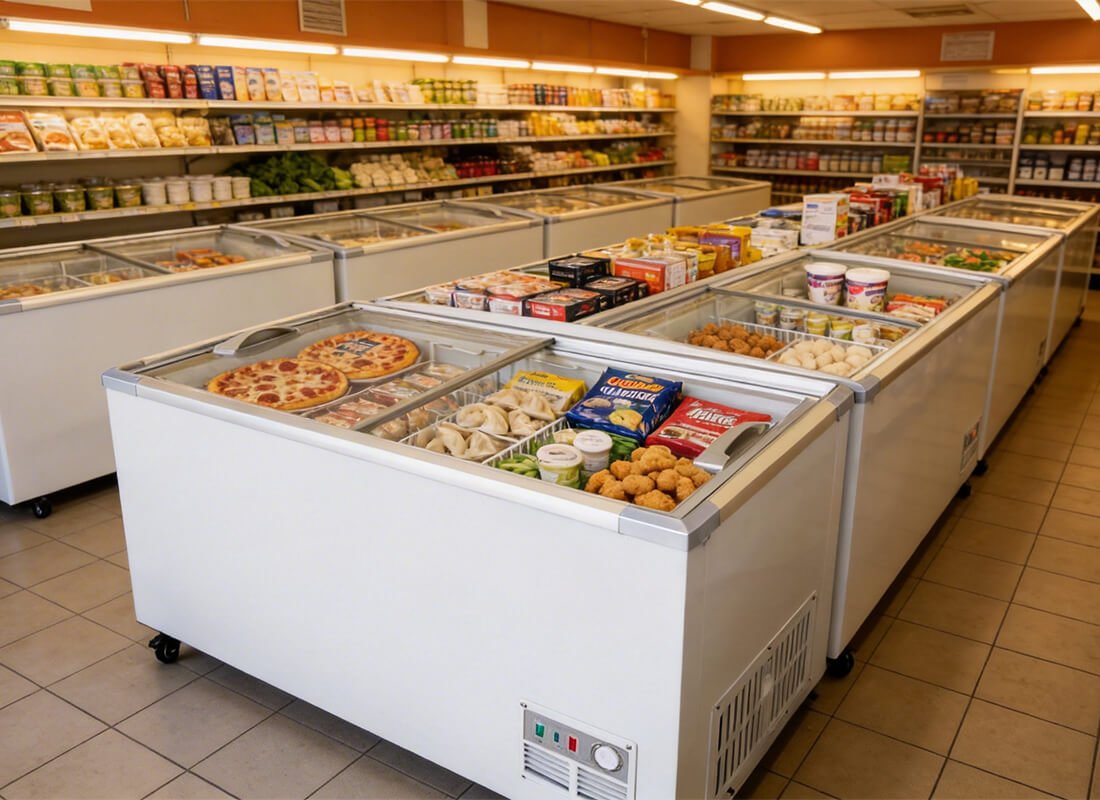
A combined island freezer is a modular freezer system made by connecting multiple island freezer units into one continuous or semi-continuous frozen display area. Instead of using separate freezer cabinets scattered across the store, retailers can build a more organized frozen aisle with connected freezer islands.
These systems are commonly used for:
Frozen meat and seafood
Frozen vegetables and fruit
Ice cream and desserts
Prepared frozen meals
Bulk frozen goods
Promotional frozen items
Wholesale frozen food displays
The main advantage is flexibility. Retailers can adjust the layout according to store size, product category, customer flow, and merchandising strategy.
Why Space Efficiency Matters in Frozen Aisle Planning
Retail space is expensive. Whether a store operates as a supermarket, warehouse-style grocery, cash-and-carry outlet, or wholesale showroom, the goal is the same: generate more revenue from the same floor area.
This is where sales per square foot frozen aisle performance becomes important. A freezer that uses too much floor space but displays limited products can reduce store profitability. On the other hand, a well-planned modular island freezer layout can help maximize both storage and display capacity.
Space efficiency affects:
Product visibility
Customer movement
Frozen aisle capacity
Restocking speed
Promotion flexibility
Impulse purchase opportunities
Energy and equipment planning
A frozen aisle should not feel crowded, confusing, or difficult to shop. It should guide customers naturally while giving them easy access to high-demand frozen products.
How Combined Island Freezers Improve ROI
The ROI of a combined island freezer is not only measured by the purchase price of the equipment. A more complete ROI calculation includes floor space usage, product capacity, merchandising performance, labor efficiency, and long-term operational flexibility.
1. Higher Sales per Square Foot
One of the biggest benefits of combined island freezers is improved sales per square foot. Because island freezers allow products to be displayed in an open, accessible format, they can increase product exposure compared with poorly placed upright or separated freezer cabinets.
A modular island setup can help retailers display more frozen products within the same footprint. This is especially useful for wholesale stores that need to show larger pack sizes or multiple SKU variations.
For example, a combined island freezer layout can group related products together:
Frozen chicken, beef, and seafood
Bulk frozen vegetables and fries
Ice cream tubs and frozen desserts
Ready-to-cook frozen meals
Seasonal or promotional frozen items
When customers can compare products quickly, they are more likely to add items to their carts.
2. Better Aisle Flow and Customer Access
Frozen aisles often become bottlenecks when freezer placement is not planned properly. If customers must turn around, wait, or move through narrow spaces, the shopping experience suffers.
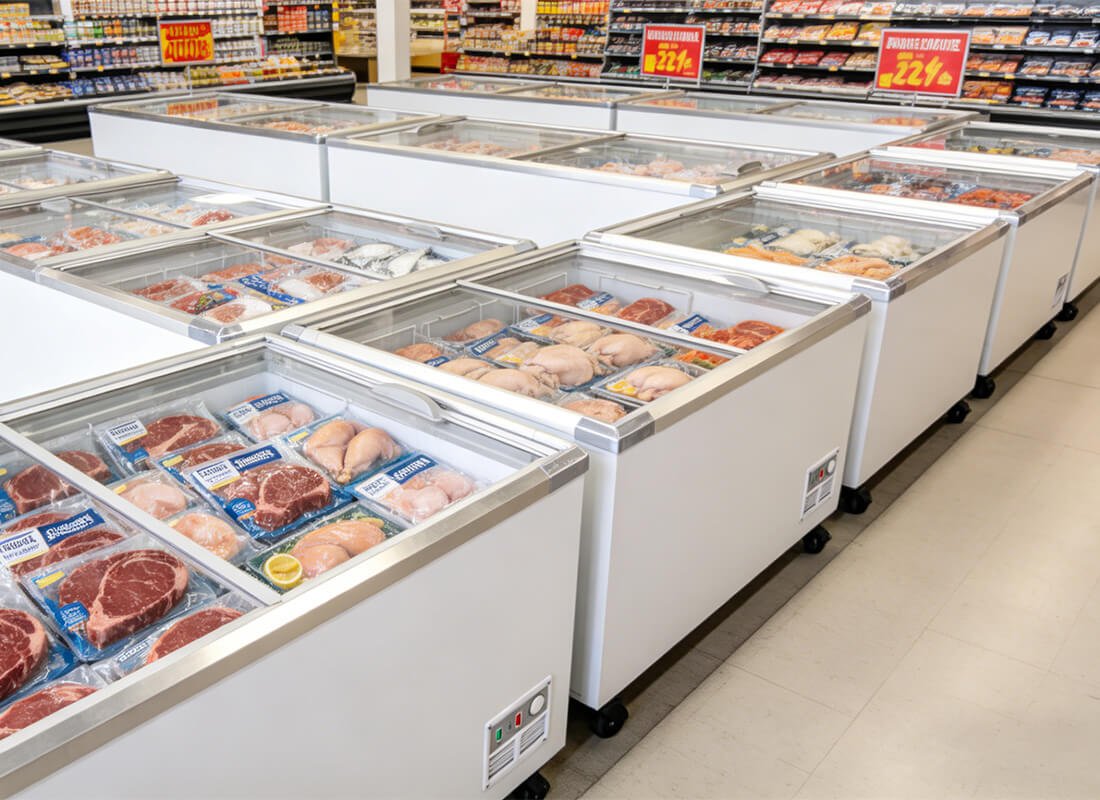
Combined island freezers help create a smoother traffic flow. They can be arranged in straight lines, back-to-back rows, or promotional islands depending on store layout.
A good modular island freezer layout supports:
Clear walking paths
Easy access from multiple sides
Better product browsing
Reduced aisle congestion
Improved visibility across product categories
For high-traffic wholesale environments, this is critical. Customers may be pushing larger carts, buying in bulk, or shopping with a specific list. A clean, open frozen aisle helps them move faster and buy more efficiently.
3. Stronger Capacity Planning
Effective island freezer capacity planning helps stores avoid two common problems: understocking and overloading.
Understocking leads to missed sales. Overloading makes the display messy, reduces visibility, and may affect airflow inside the freezer. Combined island freezers allow retailers to plan capacity based on category demand and replenishment frequency.
For example:
High-volume frozen meat may need deeper freezer sections
Ice cream may need better product separation and visibility
Promotional frozen items may need wider display access
Bulk frozen goods may need larger load capacity
A modular system allows stores to expand, reduce, or reorganize freezer space more easily than fixed standalone units.
4. Easier Restocking and Labor Efficiency
Restocking is a major part of frozen aisle operations. If staff need to move around multiple disconnected freezer units, replenishment takes longer. Poor freezer placement can also block customers during peak shopping hours.
Combined island freezer systems can improve replenishment by creating more organized product zones. Staff can restock by category, section, or promotion area.
Benefits include:
Shorter restocking routes
Faster SKU identification
Reduced labor time
Cleaner product organization
Less disruption to customers
For wholesale stores with frequent bulk purchases, faster replenishment can directly support better product availability and higher sales.
5. Flexible Promotions and Seasonal Displays
Frozen food demand changes throughout the year. Holidays, summer ice cream sales, barbecue season, seafood promotions, and bulk discount campaigns all require flexible display space.
A modular island freezer layout allows retailers to create temporary promotional zones without redesigning the entire frozen aisle.
Stores can use combined island freezers for:
Weekly frozen food discounts
Seasonal seafood promotions
Bulk meat offers
Ice cream campaigns
New product launches
Private label frozen food displays
This flexibility improves the value of the freezer investment over time. Instead of being locked into one layout, retailers can adapt the frozen aisle to sales opportunities.
How to Calculate Combined Island Freezer ROI
To evaluate combined island freezer ROI, retailers should look beyond the upfront cost. A practical ROI review should include both direct and indirect returns.
Key factors include:
Equipment cost
Installation cost
Energy consumption
Display capacity
Sales per square foot
Product turnover rate
Labor savings
Restocking efficiency
Maintenance requirements
Expected service life
A simple way to think about ROI is:
ROI = Increased profit from improved freezer layout ÷ Total investment cost
However, the real value often comes from multiple improvements working together. A store may gain more display capacity, reduce aisle congestion, improve product visibility, and restock faster at the same time.
Modular Island Freezer Layout Ideas for Wholesale Stores
Wholesale stores have different needs from standard retail supermarkets. They often require larger freezer capacity, stronger equipment, and layouts that support bulk shopping.
Here are several layout strategies to consider.
Back-to-Back Island Freezer Layout
This layout places island freezers in parallel rows. It is useful for stores with long frozen aisles and high SKU volume.
Best for:
Bulk frozen meat
Frozen seafood
Wholesale vegetables
Large pack frozen products
Main benefit:
Maximizes product capacity while keeping aisles organized.
Central Promotional Island Layout
This layout places combined island freezers in a central area for special offers or seasonal products.
Best for:
Promotional frozen foods
Holiday items
Ice cream sales
Limited-time discounts
Main benefit:
Creates strong visibility and encourages impulse purchases.
Category-Based Modular Layout
This layout divides freezer islands by product category. Each section is clearly assigned to a frozen food group.
Best for:
Supermarkets
Cash-and-carry stores
Food distributors
Retail-wholesale hybrid stores
Main benefit:
Improves shopping efficiency and makes replenishment easier.
Perimeter and Island Combination Layout
This combines upright freezers or wall freezers around the store perimeter with island freezers in the center.
Best for:
Large stores
Warehouse-style food retailers
Stores with many frozen categories
Main benefit:
Balances high-capacity storage with strong product visibility.
Key Considerations Before Choosing Combined Island Freezers
Before investing in combined island freezer systems, retailers should review the full store environment.
Important planning questions include:
How much frozen food space is currently underperforming?
Which frozen categories generate the highest margins?
Are customers experiencing aisle congestion?
How often does the frozen aisle need restocking?
Are promotions limited by current freezer space?
What is the target sales per square foot?
Will the freezer layout support future expansion?
The best freezer layout is not always the largest one. It is the layout that creates the best balance between product capacity, customer convenience, and operational efficiency.
Optimize Store Layout Refrigeration for Long-Term Value
To optimize store layout refrigeration, retailers should treat freezer placement as part of the overall store strategy. Refrigeration equipment should support sales goals, not simply fill empty floor space.
A strong frozen aisle plan should include:
Clear product zoning
Enough aisle width for customer flow
Easy staff access for restocking
Energy-efficient equipment selection
Flexible modular design
High-visibility promotional areas
Capacity planning based on real sales data
When these elements work together, combined island freezers become more than refrigeration equipment. They become a tool for improving store productivity.
Why Wholesale Buyers Should Choose Modular Combined Island Freezers
For wholesale buyers, equipment durability, capacity, and flexibility are essential. Combined island freezers are especially valuable because they can support both daily sales and high-volume promotional needs.
Wholesale-focused advantages include:
Larger display capacity
Flexible product arrangement
Better bulk product visibility
Efficient frozen aisle organization
Improved restocking workflow
Adaptable layouts for changing demand
Better use of available floor space
For retailers planning new stores, renovations, or frozen aisle upgrades, modular island freezers offer a practical way to improve space efficiency and long-term ROI.
Conclusion
The value of a combined island freezer goes far beyond refrigeration. A well-designed modular island freezer layout can help retailers improve frozen aisle performance, increase sales per square foot, simplify replenishment, and make better use of limited store space.
For supermarkets, wholesale stores, and food retailers, the frozen aisle is a major opportunity. With the right island freezer capacity planning and layout strategy, combined island freezers can turn frozen food displays into a more profitable, efficient, and customer-friendly part of the store.
Investing in modular frozen aisle design is not just an equipment decision. It is a space efficiency decision, a merchandising decision, and a long-term ROI decision.
FAQ
1. What is the main benefit of a combined island freezer?
The main benefit of a combined island freezer is improved space efficiency. By connecting modular freezer units, retailers can display more frozen products, improve aisle flow, and increase sales potential within the same floor area.
2. How does a modular island freezer layout improve ROI?
A modular island freezer layout improves ROI by increasing product visibility, raising sales per square foot, supporting better capacity planning, reducing restocking time, and allowing flexible promotional displays.
3. Are combined island freezers suitable for wholesale stores?
Yes. Combined island freezers are highly suitable for wholesale stores because they offer large display capacity, easy product access, and flexible layouts for bulk frozen goods, seasonal promotions, and high-volume SKUs.
4. How can retailers improve sales per square foot in the frozen aisle?
Retailers can improve sales per square foot by using efficient freezer layouts, grouping products by category, improving customer access, reducing wasted aisle space, and using combined island freezers for high-demand or promotional frozen items.
5. What should be considered in island freezer capacity planning?
Island freezer capacity planning should consider product category, SKU volume, restocking frequency, customer traffic, bulk package size, airflow requirements, and future expansion needs.
6. Can combined island freezers help with restocking?
Yes. Combined island freezers can make restocking faster and more organized by grouping products into clear sections. This reduces staff movement, improves product availability, and minimizes disruption to customers.
7. How do combined island freezers support promotional sales?
Combined island freezers can be arranged as central promotional zones or seasonal display areas. This helps retailers highlight discounts, new products, frozen meal deals, ice cream promotions, and bulk frozen food offers.
8. Is a combined island freezer better than separate freezer units?
For many retail and wholesale environments, combined island freezers offer better space utilization, product visibility, and layout flexibility than separate freezer units. However, the best choice depends on store size, product mix, and sales strategy.