When purchasing commercial refrigeration equipment, price and cooling performance are only part of the decision. For wholesalers, retailers, restaurants, supermarkets, convenience stores, and foodservice operators, warranty protection can directly affect long-term operating costs, equipment uptime, and customer satisfaction.
A well-built display cooler, freezer, merchandiser, or commercial refrigerator should come with clear warranty terms. However, not all warranties are the same. Before placing a bulk order or signing a purchase contract, buyers should confirm exactly what the commercial refrigeration warranty includes, how long the coverage lasts, and how after-sales service will be handled.
This guide explains the key warranty points to check before buying commercial refrigeration equipment, especially if you are sourcing for wholesale, retail chains, or project-based procurement.
Why Warranty Matters in Commercial Refrigeration
Commercial refrigeration equipment works continuously, often 24 hours a day. Unlike household refrigerators, commercial units are exposed to frequent door openings, heavy product loading, changing ambient temperatures, and demanding business environments.
A strong warranty helps protect your investment if a problem occurs during normal use. More importantly, it shows that the supplier is confident in product quality and has a reliable after-sales support system.
For wholesale buyers, warranty terms are even more important because one equipment issue may affect multiple stores, distributors, or end customers. Clear warranty expectations can reduce disputes, speed up service, and help buyers maintain a professional supply chain.
What Does a Commercial Refrigeration Warranty Usually Cover?
A standard commercial refrigeration warranty may cover defects in materials or workmanship under normal use. This usually includes certain mechanical, electrical, and structural components, depending on the supplier’s policy.
For display coolers, commercial freezers, and refrigerated merchandisers, warranty coverage may include:
- Compressor
- Condenser
- Evaporator
- Fan motors
- Thermostat or digital controller
- LED lighting
- Door hinges and handles
- Shelves and internal fittings
- Refrigeration system components
- Electrical parts
However, buyers should not assume that every component is covered for the same period. The compressor may have a longer warranty than other parts, while consumable parts may have limited or no coverage.
Before buying, ask the supplier for a written warranty document that clearly explains what is covered, what is excluded, and what procedure must be followed if service is needed.
Confirm the Compressor Warranty Years
The compressor is one of the most important and expensive components in commercial refrigeration equipment. It is the heart of the cooling system, and compressor failure can cause serious downtime.
One of the most common questions buyers ask is: How many years is the compressor warranty?
In many commercial refrigeration purchases, the compressor warranty may be longer than the general parts warranty. For example, a supplier may offer one year for the whole unit and a longer limited warranty for the compressor. However, the exact warranty period depends on the manufacturer, product model, market, and contract terms.
Before placing an order, confirm these details:
- How many years does the compressor warranty last?
- Is the compressor warranty full replacement or limited coverage?
- Does it cover only the compressor part, or also labor and refrigerant?
- Who is responsible for shipping costs if a replacement compressor is needed?
- Does improper installation or poor maintenance void the compressor warranty?
For wholesale refrigeration buyers, compressor warranty terms should be written into the purchase agreement, especially for large-volume orders.
Check the Spare Parts Warranty
Spare parts support is a key part of after-sales service. Even if the main refrigeration system is reliable, smaller components such as fans, controllers, lights, switches, gaskets, and hinges may need replacement over time.
A good spare parts warranty should clearly state which parts are included and how replacement parts are supplied.
Buyers should confirm:
- Warranty period for spare parts
- Whether replacement parts are free during the warranty period
- Whether the buyer must return defective parts
- Who pays for international or local shipping
- Expected lead time for replacement parts
- Availability of parts after the warranty expires
For wholesale buyers, spare parts availability is especially important. If you distribute refrigeration equipment to different customers or regions, you need confidence that common replacement parts can be supplied quickly.
A supplier with strong parts support can help reduce equipment downtime and improve customer satisfaction.
Understand Service Response Time
Warranty coverage is important, but response speed is just as critical. If a display cooler fails in a supermarket or convenience store, product loss can occur quickly. Delayed service may cost far more than the price of the defective part.
Before buying, ask the supplier about service response time.
Key questions include:
- How quickly will the supplier respond after receiving a warranty claim?
- Is support available by email, phone, or online service platform?
- Are troubleshooting guides, videos, or technical documents available?
- Can the supplier provide remote technical support?
- Is local service available in the buyer’s market?
- How long does it usually take to ship replacement parts?
For international wholesale orders, the supplier may not provide on-site service in every country. In that case, buyers should confirm whether the supplier can support local technicians with manuals, wiring diagrams, part lists, and remote guidance.
A clear service response standard helps both sides manage expectations and avoid delays.
What Warranty Covers for a Display Cooler
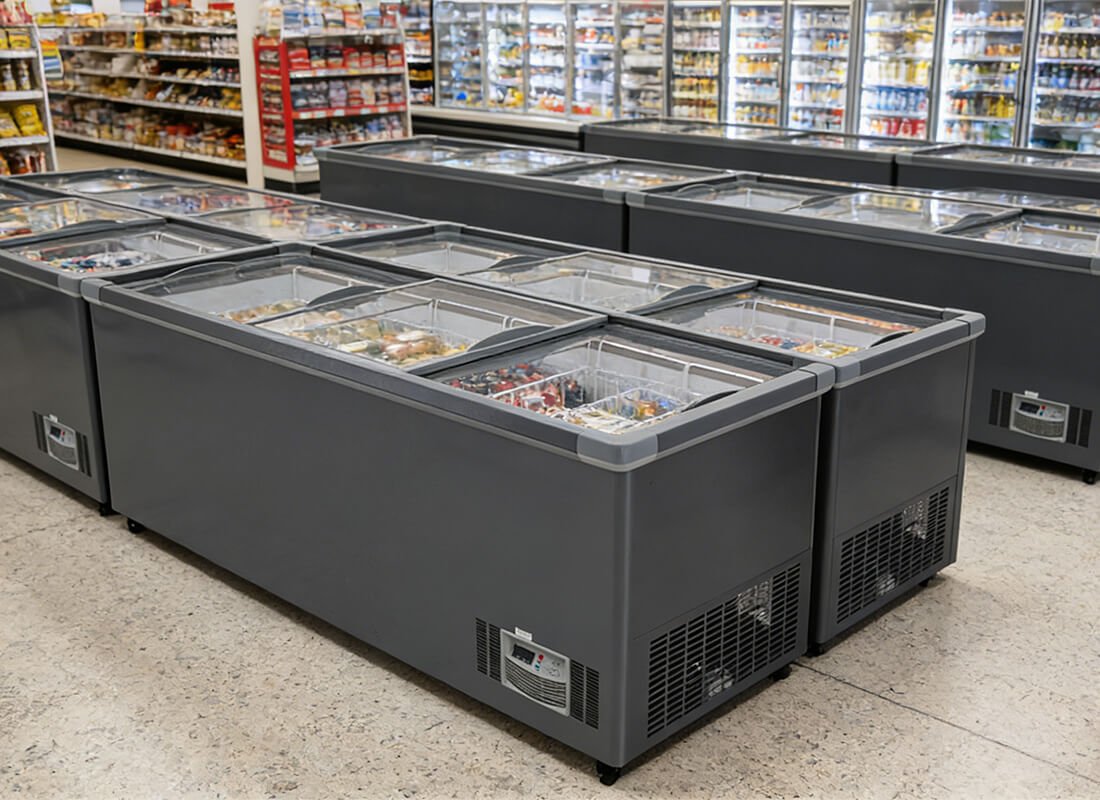
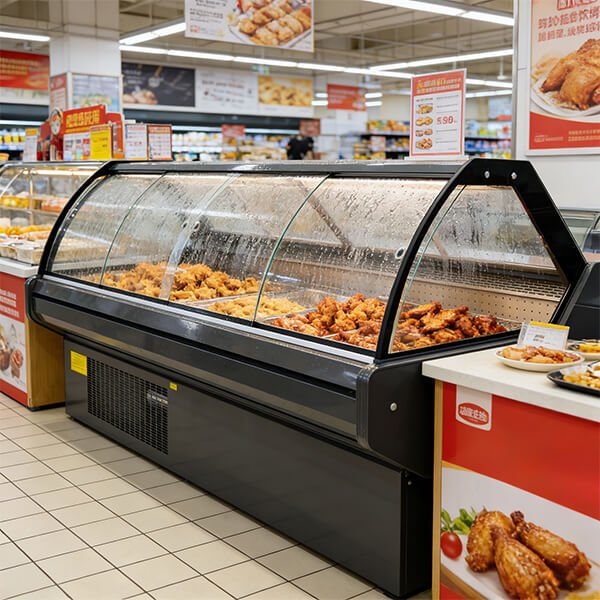
A display cooler is designed not only to keep products cold but also to present beverages, dairy products, fresh food, or packaged items attractively. Because display coolers are used in customer-facing retail environments, both performance and appearance matter.
When asking what warranty covers a display cooler, buyers should check both refrigeration and non-refrigeration components.
Important coverage areas may include:
Cooling Performance
The warranty should cover manufacturing defects that affect normal cooling performance. This may include issues with the compressor, evaporator, condenser, fan motor, controller, or refrigeration circuit.
Electrical Components
Digital controllers, temperature displays, LED lights, power switches, and wiring may be covered under the standard parts warranty. Buyers should confirm the coverage period for each component.
Glass Doors and Door Seals
Glass doors, hinges, handles, and magnetic gaskets are essential for energy efficiency and display quality. However, glass breakage caused by impact or misuse is usually not covered. Door gasket defects caused by manufacturing issues may be covered for a limited period.
Shelving and Interior Accessories
Shelves, clips, price tag strips, and internal fittings may be covered if defects are related to manufacturing. Damage caused by overloading or improper use is usually excluded.
Appearance and Cosmetic Issues
Cosmetic defects are often only accepted if reported immediately after delivery. Buyers should inspect the goods upon arrival and document any visible damage with photos.
For bulk orders, inspection procedures should be clearly agreed upon before shipment.
Common Warranty Exclusions to Watch For
A commercial refrigeration warranty does not cover every possible problem. Most suppliers exclude damage caused by improper use, poor installation, lack of maintenance, or external conditions.
Common exclusions may include:
- Damage during improper unloading or handling
- Incorrect voltage or unstable power supply
- Unauthorized repairs or modifications
- Poor ventilation around the unit
- Overloading the cabinet with products
- Blocked air circulation inside the cooler
- Failure to clean the condenser regularly
- Damage caused by accidents, misuse, or negligence
- Normal wear and tear
- Consumable parts beyond the agreed coverage
- Glass breakage caused by impact
- Problems caused by extreme ambient temperatures outside the product specification
Buyers should read the warranty exclusions carefully. Many warranty disputes happen because the buyer assumes a problem is covered, while the supplier considers it a maintenance or installation issue.
Confirm Installation and Maintenance Requirements
Some commercial refrigeration warranty claims may be rejected if the equipment was not installed or maintained correctly. This is especially important for large display coolers, remote refrigeration systems, and equipment used in demanding environments.
Before buying, confirm:
- Required voltage and plug type
- Recommended ambient temperature range
- Minimum ventilation space around the unit
- Cleaning frequency for the condenser
- Drainage requirements
- Indoor or outdoor usage limitations
- Whether installation must be performed by a qualified technician
- Required maintenance records for warranty claims
For wholesale buyers, it is helpful to provide end users with a simple maintenance guide. This can reduce avoidable failures and protect warranty validity.
Ask About Warranty Claim Procedures
A warranty is only useful if the claim process is practical. Before purchasing commercial refrigeration equipment, buyers should understand exactly how to submit a claim.
A professional supplier should be able to explain the process clearly.
Usually, a warranty claim may require:
- Product model number
- Serial number
- Purchase invoice or order reference
- Photos or videos of the issue
- Description of the problem
- Temperature readings
- Error codes from the controller
- Maintenance or installation information
- Confirmation of operating conditions
For wholesale orders, buyers should ask whether the supplier can provide a standard claim form. This makes communication faster and more professional.
Clarify Labor, Shipping, and Replacement Costs
One of the most important contract points is cost responsibility. A warranty may cover replacement parts, but not labor, shipping, refrigerant, customs duties, or local technician fees.
Before buying, confirm who pays for:
- Replacement parts
- International freight
- Local delivery
- Labor costs
- Refrigerant recharge
- Technician service fees
- Return shipping of defective parts
- Customs clearance or import duties
For international B2B buyers, this is especially important. A “free replacement part” may still involve shipping costs or local repair costs. These details should be confirmed before the order is placed.
Check Whether the Warranty Is Transferable
If you are a distributor, wholesaler, or project supplier, you may resell the equipment to end customers. In this case, confirm whether the warranty is transferable.
Ask the supplier:
- Does the warranty start from the shipment date, invoice date, or end-user installation date?
- Can the final customer claim warranty directly?
- Should claims go through the distributor?
- Is product registration required?
- Can the warranty be customized for wholesale programs?
Clear warranty transfer rules help avoid confusion between manufacturer, distributor, retailer, and end user.
Compare Warranty Terms Before Choosing a Supplier
When comparing commercial refrigeration suppliers, do not look only at the unit price. A lower price may not be the best value if the warranty is weak, parts are difficult to obtain, or service response is slow.
A reliable supplier should provide:
- Clear written warranty terms
- Reasonable compressor warranty years
- Defined spare parts warranty
- Fast service response time
- Technical support documents
- Stable spare parts availability
- Transparent claim procedures
- Experience with wholesale or project orders
For long-term buyers, after-sales capability can be just as important as production capacity.
Warranty Checklist Before Buying Commercial Refrigeration
Before confirming your commercial refrigeration order, use this checklist:
- What is the full unit warranty period?
- How many years is the compressor warranty?
- What spare parts are covered?
- Are labor and shipping included?
- What is the expected service response time?
- Are replacement parts available after the warranty period?
- What does the warranty cover for display coolers?
- What are the main exclusions?
- What installation conditions must be followed?
- What maintenance is required?
- How are warranty claims submitted?
- Who handles warranty service for end customers?
- Are warranty terms included in the contract or proforma invoice?
Getting these answers before purchase can help prevent misunderstandings and protect your business.
Final Thoughts
A commercial refrigeration warranty is more than a simple promise. It is a practical agreement that defines product support, risk responsibility, and long-term service expectations.
Before buying display coolers, commercial freezers, beverage refrigerators, or refrigerated merchandisers, buyers should carefully review compressor warranty years, spare parts coverage, service response time, claim procedures, and exclusions.
For wholesale buyers, clear warranty terms are essential. They help protect margins, support customers, and build a more reliable refrigeration supply chain.
When choosing a commercial refrigeration supplier, always look beyond the initial price. A dependable warranty and responsive after-sales service can make a major difference in the total cost of ownership.
FAQ
1. What is a commercial refrigeration warranty?
A commercial refrigeration warranty is a written guarantee from the supplier or manufacturer that certain parts or defects will be covered for a specific period under normal use. It usually covers manufacturing defects but may exclude damage caused by misuse, poor installation, or lack of maintenance.
2. How many years should a compressor warranty last?
Compressor warranty years vary by supplier, model, and market. In many cases, the compressor may have a longer warranty than other components. Buyers should confirm whether the warranty covers only the compressor part or also labor, refrigerant, and shipping costs.
3. What warranty covers a display cooler?
A display cooler warranty may cover refrigeration components, electrical parts, fan motors, controllers, LED lighting, doors, hinges, and shelves, depending on the supplier’s policy. Glass breakage, misuse, poor maintenance, and cosmetic damage after delivery are often excluded.
4. Are spare parts included in the warranty?
Some suppliers include spare parts during the warranty period, while others may charge for certain components. Buyers should confirm the spare parts warranty, replacement process, lead time, and shipping responsibility before purchasing.
5. Why is service response time important?
Service response time is important because refrigeration failures can cause product loss and business interruption. A fast response helps buyers troubleshoot issues, arrange replacement parts, and reduce equipment downtime.
6. Does a commercial refrigeration warranty cover labor costs?
Not always. Many warranties cover replacement parts but exclude labor, local technician fees, refrigerant, and shipping. Buyers should confirm all cost responsibilities before signing the purchase contract.
7. Can improper maintenance void the warranty?
Yes. If the unit is not installed, cleaned, or maintained according to the supplier’s instructions, the warranty may become invalid. Common issues include poor ventilation, dirty condensers, unstable voltage, and overloading the cabinet.
8. What should wholesale buyers confirm before placing an order?
Wholesale buyers should confirm the full warranty period, compressor warranty years, spare parts coverage, service response time, claim process, exclusions, cost responsibilities, and whether the warranty can be transferred to end customers.