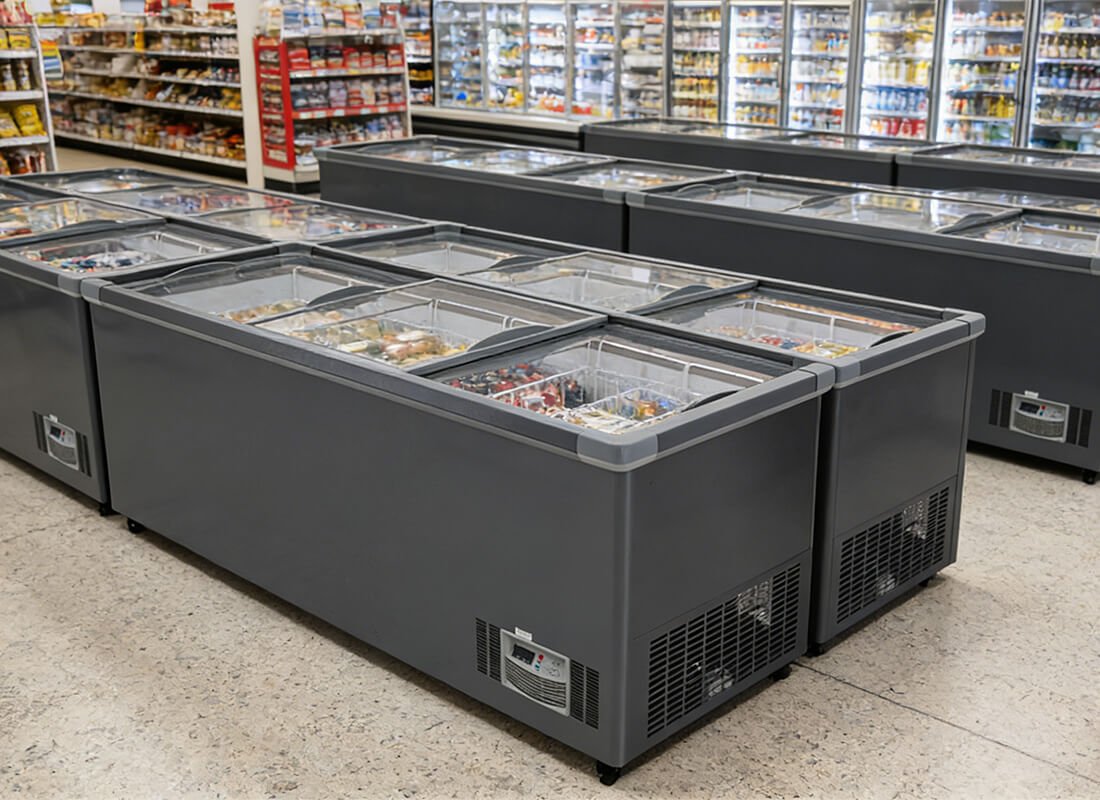
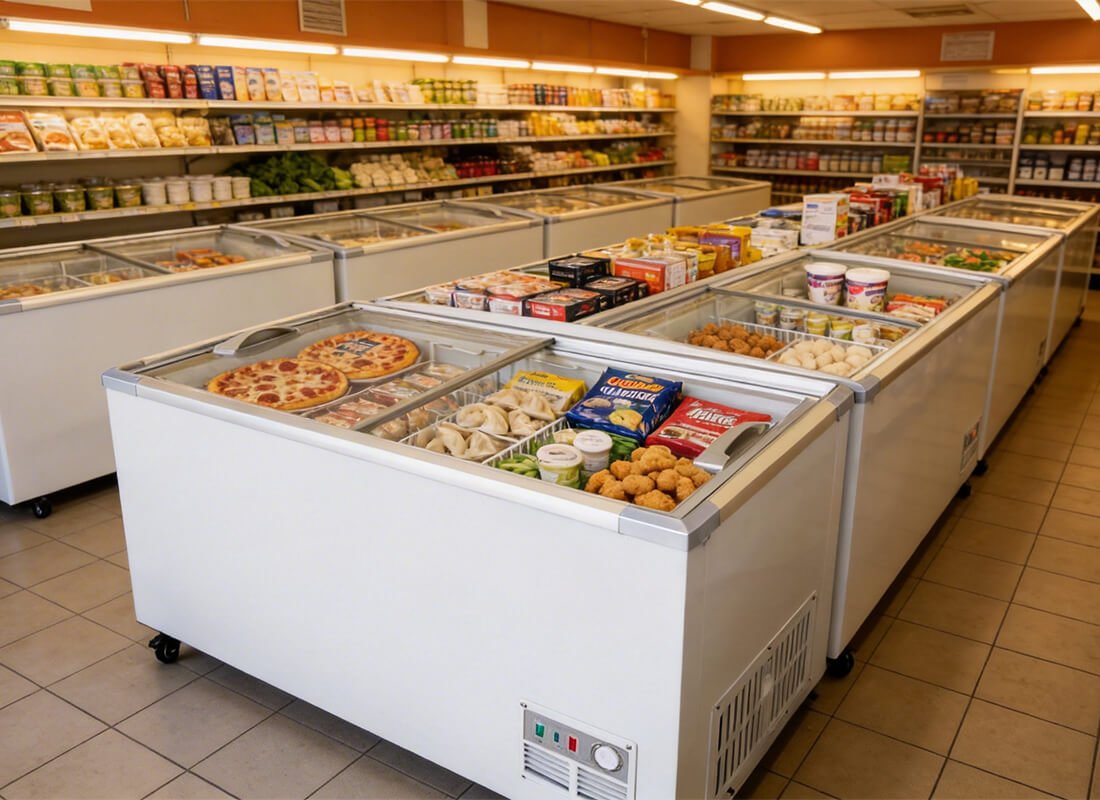
Open display cases are a popular choice for supermarkets, convenience stores, grocery chains, and fresh food retailers. They provide excellent product visibility, easy customer access, and strong merchandising appeal. However, their performance depends heavily on store layout.
One of the most common layout mistakes is placing an open chiller near the store entrance.
At first glance, this may seem like a smart merchandising decision. High-traffic areas near the entrance attract attention and encourage impulse purchases. But from a refrigeration perspective, the entrance can be one of the most challenging zones in the entire store.
Every time the door opens, outdoor air enters the building. In warm, humid, or windy conditions, this air can disrupt the temperature stability of open refrigerated cases. This process is known as warm air infiltration, and it can directly affect product safety, energy consumption, and equipment lifespan.
For wholesalers, contractors, and store planners, understanding how entrance airflow interacts with open display cases is essential for building a reliable and efficient refrigeration layout.
What Is Warm Air Infiltration in Retail Refrigeration?
Warm air infiltration happens when outside air enters a temperature-controlled space and mixes with indoor air. In stores, this usually occurs through:
- Main entrance doors
- Automatic sliding doors
- Loading areas
- Poorly sealed openings
- High-traffic pathways
- HVAC air movement
- Pressure differences between indoor and outdoor spaces
When warm air reaches an open display case, it can interfere with the case’s cold air curtain. Since open chillers do not have physical doors, they rely on a controlled flow of refrigerated air to protect the product zone.
If that airflow is disturbed, the case must work harder to maintain proper temperature.
Why Store Entrances Are Risky for Open Display Cases
The entrance area is a dynamic environment. Unlike a quiet aisle inside the store, the front entrance experiences frequent changes in airflow, humidity, temperature, and pressure.
When customers enter and exit, doors open repeatedly. This creates sudden air exchange between the outdoor environment and the store interior. If the entrance faces direct sunlight, strong wind, or a warm outdoor climate, the impact becomes even greater.
For an open chiller near entrance areas, this can create several problems:
- Warm air enters the refrigerated display zone.
- The air curtain becomes unstable.
- Product temperature may rise.
- The compressor runs longer.
- Frost, condensation, or moisture may increase.
- Energy costs go up.
- Equipment components experience more stress.
In short, poor placement can turn a high-performance open case into an inefficient and unstable refrigeration point.
How Air Curtains Protect Open Display Cases
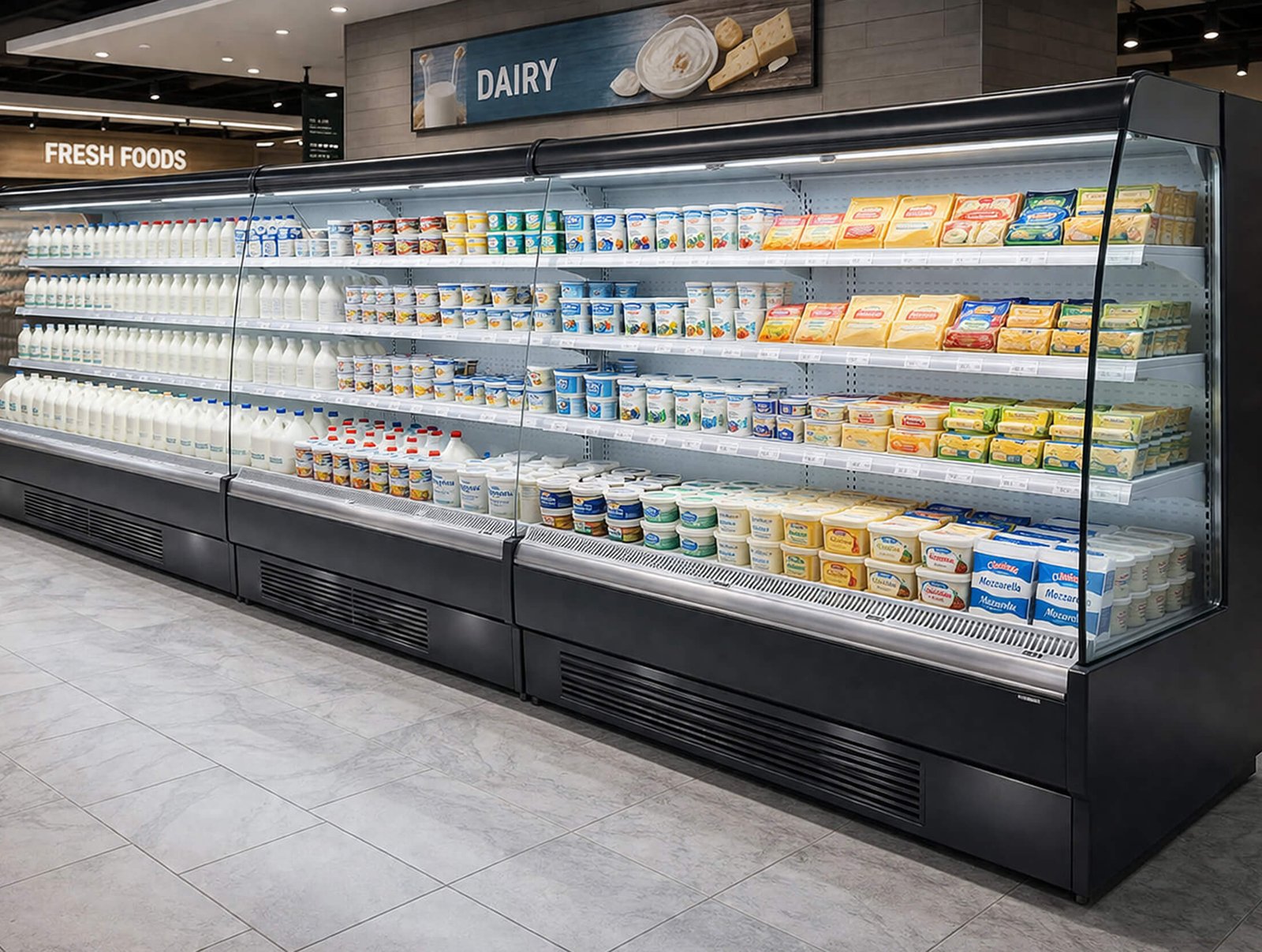
Open refrigerated cases are designed with an air curtain. This invisible layer of cold air flows from the top discharge grille down to the return air grille at the bottom front of the case.
The air curtain acts like a soft barrier between the refrigerated product area and the warmer store environment. When it works correctly, it helps maintain stable product temperatures while keeping the display open and accessible.
However, air curtain effectiveness depends on stable surrounding conditions. Strong cross drafts, entrance airflow, HVAC vents, and heavy customer movement can break or bend the curtain.
Once the air curtain is disrupted, warm air can enter the case and cold air can spill out. This reduces cooling efficiency and forces the refrigeration system to compensate.
The Role of Customer Traffic
Customer traffic is another major factor. Entrances naturally have more foot traffic than most other parts of the store. Shoppers may pause, walk quickly, push carts, gather in groups, or move in different directions.
This movement creates air turbulence.
For open cases, turbulence is not just a comfort issue. It can disturb the carefully engineered cold airflow. When people continuously pass in front of the case, especially in a narrow entrance zone, the air curtain may lose stability.
This is why open display cases should not be treated only as merchandising fixtures. They are technical refrigeration systems that require suitable surrounding airflow conditions.
Heat Sources Make the Problem Worse
Store entrances are often exposed to additional heat sources. These may include:
- Direct sunlight through glass doors
- Warm outdoor air
- Heated vestibules
- HVAC supply vents
- Air blowers
- Lighting fixtures
- Cooking or bakery areas nearby
- High ambient temperature zones
A key rule in commercial refrigeration layout is simple: avoid heat sources refrigeration equipment cannot easily overcome.
When an open display case is exposed to warm air, sunlight, or hot airflow, the refrigeration load increases. This can reduce energy efficiency and may cause uneven product temperature across the display.
For wholesale buyers, this matters because the total cost of ownership is not only the purchase price of the case. It also includes energy use, maintenance frequency, temperature reliability, and product loss risk.
Common Layout Mistakes to Avoid
When planning a store layout, avoid placing open display cases in areas where airflow is unstable or heat exposure is high.
Common mistakes include:
- Installing open chillers directly beside automatic entrance doors
- Positioning open cases in the path of outdoor air drafts
- Placing cases under HVAC supply vents
- Locating refrigerated displays near ovens, hot food counters, or bakery equipment
- Exposing cases to direct sunlight through windows or glass doors
- Creating narrow aisles where customer traffic constantly disrupts airflow
- Ignoring wind direction at the entrance
- Using open cases in stores without proper indoor climate control
These layout issues may seem small during installation, but they can create long-term performance problems.
Best Practices for Open Display Case Placement
A well-planned layout helps open cases perform as intended. For supermarkets, convenience stores, and food retail projects, consider the following recommendations.
1. Keep Open Cases Away from Entrances
The safest approach is to place open display cases deeper inside the store, away from direct entrance airflow. This helps protect the air curtain and maintain stable product temperature.
If products must be promoted near the entrance, consider using closed-door merchandisers instead of open chillers.
2. Use a Vestibule or Entrance Buffer
A vestibule creates a transition zone between outdoor and indoor air. This can reduce direct warm air infiltration and improve indoor climate stability.
For larger retail spaces, entrance design can make a major difference in refrigeration performance.
3. Avoid Direct HVAC Airflow
Do not place open cases directly under supply vents, return vents, fans, or air blowers. Even cool air from HVAC systems can disrupt the case’s designed airflow pattern.
Stable air is more important than simply having cold air nearby.
4. Control Sunlight Exposure
Glass storefronts can create strong solar heat gain. If an open display case is exposed to direct sunlight, product temperature may become harder to control.
Use shading, window film, better case positioning, or alternative equipment types where needed.
5. Maintain Proper Clearance
Open cases need enough space around them for airflow, service access, and customer movement. Crowded layouts can increase turbulence and reduce performance.
Always follow the manufacturer’s installation guidelines.
6. Match Equipment to the Store Environment
Not every case is suitable for every location. In high-traffic or high-temperature zones, a glass-door refrigerated merchandiser may be a better choice than an open case.
For wholesale refrigeration projects, selecting the right model for the real store environment is just as important as choosing the right size.
Open Chiller Near Entrance: Is It Ever Acceptable?
In some stores, space limitations make it difficult to avoid entrance placement completely. If an open chiller must be installed near an entrance, extra precautions are necessary.
Consider these measures:
- Use a double-door vestibule
- Install air curtains at the entrance door
- Improve HVAC balancing
- Reduce direct drafts toward the case
- Choose a high-efficiency open case with strong air curtain design
- Monitor product temperature carefully
- Use night curtains during closed hours
- Avoid placing sensitive products in the most exposed zones
- Consider semi-vertical or glass-door alternatives
Even with these precautions, entrance placement should be evaluated carefully. The goal is to reduce risk, not simply rely on the equipment to overcome a poor environment.
Why This Matters for Wholesale Buyers
Wholesale refrigeration buyers often focus on product dimensions, capacity, price, and lead time. These are important, but layout compatibility is equally critical.
A display case that performs well in one store may perform poorly in another if installed in the wrong location. For distributors, contractors, and chain store buyers, this means layout guidance can reduce after-sales issues and improve customer satisfaction.
Better placement can help customers achieve:
- More stable product temperature
- Lower energy consumption
- Reduced compressor workload
- Less condensation and frost
- Longer equipment service life
- Better food safety performance
- Improved shopping experience
For wholesale projects, professional layout planning protects both the retailer’s investment and the supplier’s reputation.
Choosing the Right Refrigeration Solution
When selecting refrigeration equipment for entrance-adjacent areas, consider the product category and store conditions.
For beverages, packaged dairy, salads, sandwiches, and ready-to-eat foods, temperature stability is essential. If the area has frequent warm air infiltration, a glass-door merchandiser may provide better protection than an open case.
Open display cases are excellent for high-visibility merchandising, but they perform best in stable indoor environments. The right solution should balance product access, visual appeal, energy efficiency, and temperature control.
A reliable wholesale supplier should help buyers evaluate not only the case itself, but also the installation environment.
Conclusion
Open display cases can be powerful merchandising tools, but they are sensitive to airflow conditions. Store entrances create warm air infiltration, air turbulence, humidity changes, and heat exposure. These factors can reduce air curtain effectiveness and increase the workload of the refrigeration system.
To protect product temperature and improve energy efficiency, avoid placing open cases directly near entrance doors, HVAC vents, sunlight, and other heat sources. When entrance placement cannot be avoided, use proper design measures such as vestibules, airflow control, and careful equipment selection.
For wholesale refrigeration projects, smart layout planning is not optional. It is a key part of long-term equipment performance, customer satisfaction, and operating cost control.
FAQ
1. What is warm air infiltration in open display cases?
Warm air infiltration occurs when warm outside air enters the store and reaches the refrigerated display area. In open display cases, this can disturb the cold air curtain and make it harder to maintain stable product temperatures.
2. Can I place an open chiller near the store entrance?
It is generally not recommended to place an open chiller near the entrance. Entrance areas often have warm air drafts, high customer traffic, and unstable airflow, all of which can reduce refrigeration performance.
3. How does an air curtain work in an open display case?
An air curtain is a controlled stream of cold air that flows across the front opening of the case. It helps separate the refrigerated product zone from the warmer store environment while keeping products accessible to customers.
4. What can reduce air curtain effectiveness?
Air curtain effectiveness can be reduced by entrance drafts, HVAC vents, fans, direct sunlight, customer traffic, poor installation clearance, and nearby heat sources.
5. Are glass-door merchandisers better near entrances?
In many cases, yes. Glass-door merchandisers provide a physical barrier against warm air infiltration, making them more suitable for high-traffic or entrance-adjacent areas than open display cases.
6. How can retailers reduce warm air infiltration?
Retailers can reduce warm air infiltration by using vestibules, maintaining proper door seals, balancing HVAC systems, avoiding direct drafts, controlling sunlight, and placing open display cases away from entrances.
7. Why is store layout important for commercial refrigeration?
Store layout affects airflow, temperature stability, energy efficiency, and product safety. Even high-quality refrigeration equipment may perform poorly if installed near heat sources or unstable airflow zones.