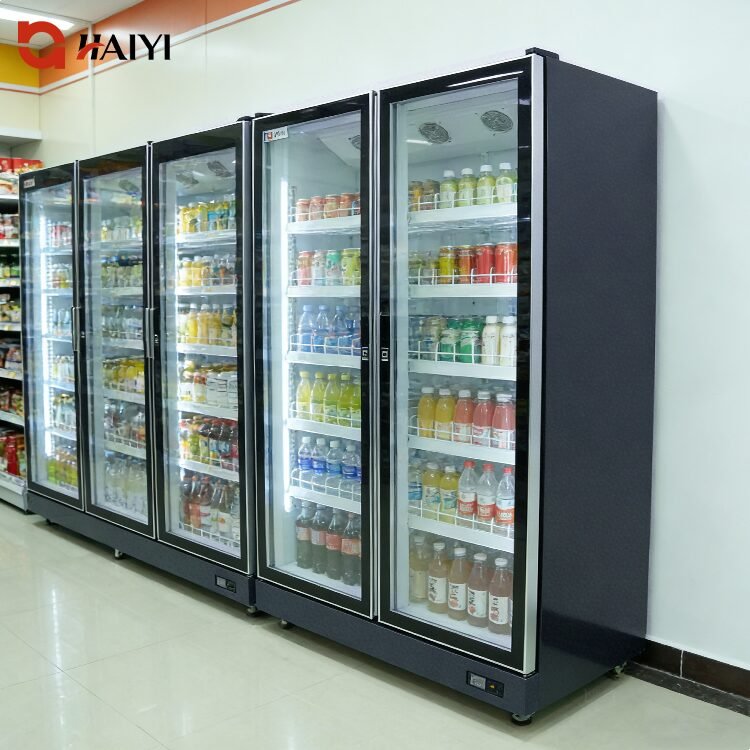
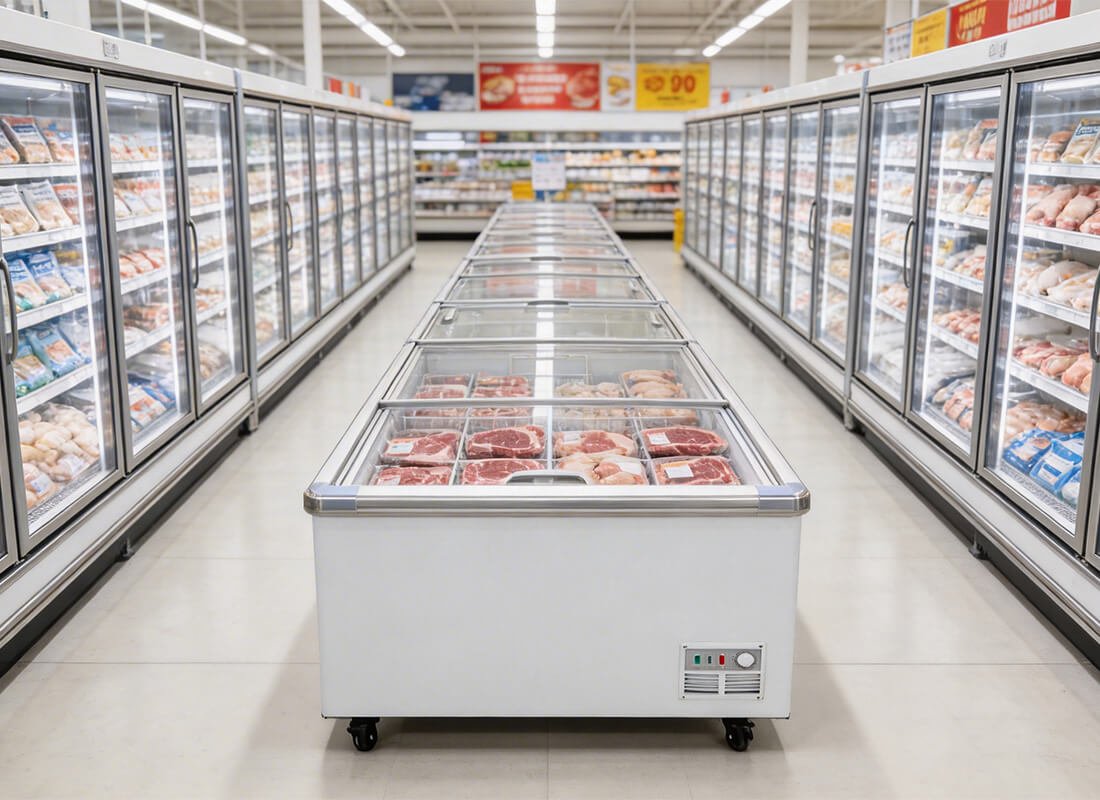
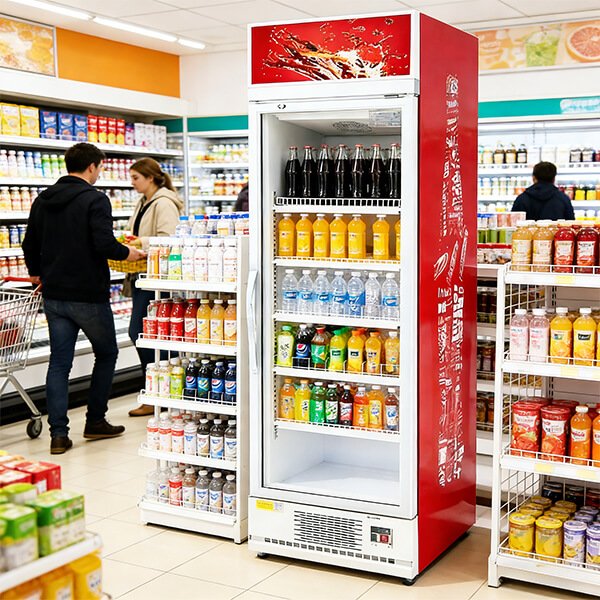
For supermarkets, convenience stores, beverage distributors, and wholesale retailers, refrigerated merchandisers are more than cold storage. They are selling tools. A well-lit display can make bottled drinks, dairy, frozen food, desserts, and packaged products look fresher, cleaner, and easier to choose.
But many operators still ask the same practical question:
If we make the merchandiser brighter, will it use more electricity or create more heat?
The answer depends on the lighting technology. With traditional fluorescent tubes, more brightness often meant more wattage, more heat, and more cooling demand. With modern LED display lighting, the equation changes. A properly selected LED upgrade can improve product visibility while reducing kWh consumption and lowering the heat load inside the refrigerated cabinet.
For wholesale buyers, store chains, and refrigeration equipment suppliers, understanding the LED upgrade merchandiser ROI is important before making a lighting decision.
Why Lighting Matters in Refrigerated Merchandisers
A refrigerated merchandiser has two jobs: keep products at the correct temperature and make them attractive to customers. Lighting directly affects how shoppers perceive the products inside.
Poor lighting can make products look dull, old, or difficult to identify. Uneven lighting can create shadows on labels, reducing shelf impact. In contrast, high-quality LED lighting can help products appear brighter, cleaner, and more organized.
For retailers and wholesalers, this matters because better visibility can support:
- Faster product recognition
- Better label readability
- Stronger shelf presentation
- Improved impulse purchases
- A cleaner, more modern store image
In beverage coolers, open-front displays, glass door freezers, and vertical refrigerated merchandisers, lighting is part of the sales experience.
The Old Problem: Brightness Often Meant More Heat
Traditional fluorescent lighting has been widely used in refrigerated display cases for many years. However, fluorescent tubes are not ideal for cold environments.
They may require more energy, perform less efficiently in low temperatures, and release more heat into the cabinet. That heat does not simply disappear. In a refrigerated merchandiser, every extra watt of heat must be removed by the refrigeration system.
This creates a double cost:
First, the lighting consumes electricity directly.
Second, the refrigeration system may need to work harder to remove the heat produced by the lights.
This is why the conversation should not only be about lamp wattage. For refrigerated displays, the true operating cost includes both lighting kWh and refrigeration heat load.
How LED Lighting Changes the ROI Equation
LED lighting is different because it produces more usable light per watt than traditional lighting. This means a merchandiser can often become brighter and more visually appealing while using less electricity.
A high-quality LED upgrade can deliver:
- Lower lighting wattage
- Less heat released into the cabinet
- Reduced refrigeration workload
- Longer service life
- Lower maintenance costs
- Better color consistency
- Improved product visibility
This is the core reason why LED upgrade merchandiser ROI can be attractive for both small retrofits and larger equipment replacement projects.
Visibility: Brighter Does Not Always Mean Higher Wattage
Many buyers assume that brighter lighting automatically means higher energy use. With LED technology, that is not always true.
Brightness should not be judged only by wattage. Wattage measures power consumption, not visual performance. A lower-watt LED strip or LED tube can often provide better product illumination than a higher-watt fluorescent lamp because LEDs direct light more efficiently toward the shelves and products.
For refrigerated merchandisers, good visibility depends on several factors:
- Light output
- Beam angle
- Light placement
- Color temperature
- Color rendering
- Door frame or shelf shadowing
- Product packaging type
- Cabinet depth and height
A well-designed LED system does not simply make the cabinet “brighter.” It makes the light more useful. It directs illumination toward the products instead of wasting light inside the fixture or toward areas customers do not see.
Heat Load: Why LED Lighting Helps Refrigeration Efficiency
Heat load is one of the most overlooked factors in display lighting ROI.
In a refrigerated merchandiser, lighting heat affects internal temperature stability. If the lighting produces excess heat, the compressor, fans, or refrigeration system may need to run longer to maintain the target temperature.
LED lighting generally produces less radiant heat than fluorescent lighting and uses less power to produce the same or better visual effect. This helps reduce unnecessary heat inside the display area.
Lower heat load can contribute to:
- More stable cabinet temperatures
- Less stress on refrigeration components
- Lower refrigeration energy demand
- Better product protection
- Potentially longer equipment life
For businesses operating multiple merchandisers, even small reductions in heat load per cabinet can become meaningful over time.
kWh Savings: The Direct Energy Benefit
The most visible ROI factor is reduced electricity consumption from lighting.
For example, if an older refrigerated merchandiser uses fluorescent lighting for long daily operating hours, replacing it with LED lighting can reduce lighting wattage significantly. Since merchandisers often run lights for many hours each day, the annual kWh savings can add up quickly.
The basic energy savings formula is:
Energy Savings = Wattage Reduction × Operating Hours ÷ 1,000
For example, if an LED upgrade reduces lighting power by 80 watts and the merchandiser operates 14 hours per day:
80 W × 14 hours × 365 days ÷ 1,000 = 408.8 kWh saved per year
That is only the direct lighting energy saving. It does not include the possible additional savings from reduced refrigeration heat load.
Maintenance Savings: Another Part of ROI
LED lighting also helps reduce maintenance costs.
Traditional lamps may require regular replacement, especially in commercial environments with long operating hours. Fluorescent tubes can flicker, dim over time, or perform poorly in cold temperatures. Replacing lamps also requires labor and may interrupt store operations.
LED lighting typically offers a longer service life, helping reduce:
- Lamp replacement frequency
- Maintenance labor
- Downtime
- Stocking of replacement tubes
- Customer-facing lighting failures
For wholesale buyers and chain operators, lower maintenance can be just as important as lower electricity use.
Product Visibility Can Support Sales Performance
Energy savings are easy to calculate. Sales impact is harder to measure but often important.
Better display lighting can improve the appearance of high-margin products such as beverages, desserts, fresh dairy, packaged meals, and frozen foods. When products are easier to see and labels are clearer, shoppers can make decisions faster.
LED lighting may support better merchandising by improving:
- Color accuracy
- Shelf uniformity
- Brand visibility
- Premium product presentation
- Customer confidence in freshness
For stores with high foot traffic, improved visibility can be a major part of the total ROI, even if it is not always included in a simple energy payback calculation.
Small Retrofit, Big Impact: Why LED Upgrades Are Practical
One reason LED upgrades are popular is that they can often be treated as a small retrofit rather than a major equipment replacement.
Depending on the merchandiser design, LED upgrades may include:
- Replacing fluorescent tubes with LED tubes
- Installing vertical LED light bars
- Adding shelf lighting
- Upgrading door frame lighting
- Replacing old ballasts or drivers
- Choosing low-heat LED modules for cold environments
For wholesalers, equipment distributors, and commercial refrigeration suppliers, LED lighting upgrades are a practical value-added option. They can help customers modernize existing equipment without replacing the entire merchandiser.
Key Factors That Affect LED Upgrade ROI
The ROI of an LED upgrade depends on more than the price of the lights. Buyers should consider the complete operating picture.
Important factors include:
| ROI Factor | Why It Matters |
|---|---|
| Existing lighting wattage | Higher old wattage usually means greater savings potential |
| LED wattage | Lower wattage reduces direct kWh use |
| Operating hours | Longer daily use improves payback speed |
| Electricity rate | Higher energy costs make savings more valuable |
| Heat load reduction | Less heat can reduce refrigeration workload |
| Maintenance cost | Longer LED life reduces replacement expenses |
| Product visibility | Better display quality may support sales |
| Installation cost | Retrofit complexity affects payback time |
| Lighting quality | Poor LED quality can reduce customer appeal |
A low-cost LED product is not always the best ROI choice. If the light output is weak, color is poor, or failure rate is high, the upgrade may hurt merchandising performance. The best result comes from balancing energy efficiency, durability, and display quality.
Choosing the Right LED Lighting for Refrigerated Merchandisers
When selecting LED lighting for refrigerated displays, wholesale buyers should look beyond price and wattage.
Key selection points include:
1. Suitable brightness level
The lighting should make products visible without creating glare or harsh reflections on glass doors.
2. Proper color temperature
Cool white lighting is often used for beverages and frozen foods, while neutral white may work well for dairy, fresh products, and prepared meals.
3. Good color rendering
Better color rendering helps packaging and food products look more natural and appealing.
4. Low heat output
LEDs should improve visibility without adding unnecessary heat to the cabinet.
5. Cold-environment performance
The lighting should be designed to operate reliably in refrigerated or frozen conditions.
6. Durable structure
Commercial merchandisers need lighting that can handle frequent use, door openings, moisture, and temperature changes.
7. Easy installation
For retrofit projects, easier installation can reduce labor cost and shorten payback time.
Common Mistake: Comparing Only Purchase Price
One of the biggest mistakes in LED upgrade decisions is comparing only the upfront price.
A cheaper lighting option may look attractive at first, but it can cost more over time if it has poor efficiency, short service life, weak brightness, or inconsistent color. For refrigerated merchandisers, poor lighting can also affect product presentation.
A better buying decision compares total value:
- Purchase cost
- Installation cost
- Energy savings
- Refrigeration impact
- Maintenance savings
- Warranty support
- Product display quality
- Expected service life
For wholesale refrigeration projects, this total-cost approach is especially important because equipment may be deployed across many stores or customer locations.
Simple ROI Formula for LED Merchandiser Upgrades
A practical LED upgrade ROI estimate can start with this formula:
Annual Savings = Lighting Energy Savings + Estimated Refrigeration Savings + Maintenance Savings
Payback Period = Total Upgrade Cost ÷ Annual Savings
For a more complete evaluation, businesses should also consider the potential sales benefit from improved product visibility. While this can be harder to quantify, it may be meaningful for high-traffic retail locations.
Final Thoughts: Better Visibility Without the Old Energy Penalty
For refrigerated merchandisers, LED lighting is not only a cosmetic upgrade. It can improve product visibility, reduce lighting kWh, lower heat load, and reduce maintenance needs.
The key point is simple:
Brighter does not have to mean hotter or more expensive to operate.
With the right LED solution, businesses can create cleaner, more attractive product displays while improving energy efficiency. For wholesalers, retailers, and commercial refrigeration suppliers, an LED upgrade can be a practical, high-value retrofit with measurable ROI.
FAQ
1. What is the main benefit of an LED upgrade for refrigerated merchandisers?
The main benefit is the combination of better product visibility and lower energy use. LED lighting can make products easier to see while using less electricity than traditional fluorescent lighting.
2. Does brighter LED lighting use more electricity?
Not necessarily. LED lighting is more efficient than many traditional lighting options. A well-designed LED system can provide better brightness and product visibility with lower wattage.
3. Can LED lighting reduce heat inside a refrigerated merchandiser?
Yes. LED lighting generally produces less heat than fluorescent lighting. Lower heat output can help reduce the heat load inside the cabinet and may reduce the workload on the refrigeration system.
4. How does LED lighting improve merchandiser ROI?
LED lighting can improve ROI through lower kWh consumption, reduced refrigeration heat load, lower maintenance costs, longer service life, and better product presentation.
5. Is LED lighting suitable for freezers and coolers?
Yes, but the LED product should be designed for cold environments. Buyers should choose lighting that performs reliably in refrigerated or frozen conditions.
6. How do I calculate LED upgrade payback?
You can estimate payback by dividing the total upgrade cost by annual savings. Annual savings may include lighting energy savings, estimated refrigeration savings, and maintenance savings.
7. What color temperature is best for refrigerated displays?
It depends on the product type. Cool white is often used for beverages and frozen products, while neutral white may be better for dairy, prepared foods, or products where natural color appearance is important.
8. Is LED lighting worth it for small merchandiser retrofits?
Yes. Even small retrofits can deliver value when the merchandiser runs for many hours per day. The more operating hours and the higher the electricity cost, the stronger the potential ROI.