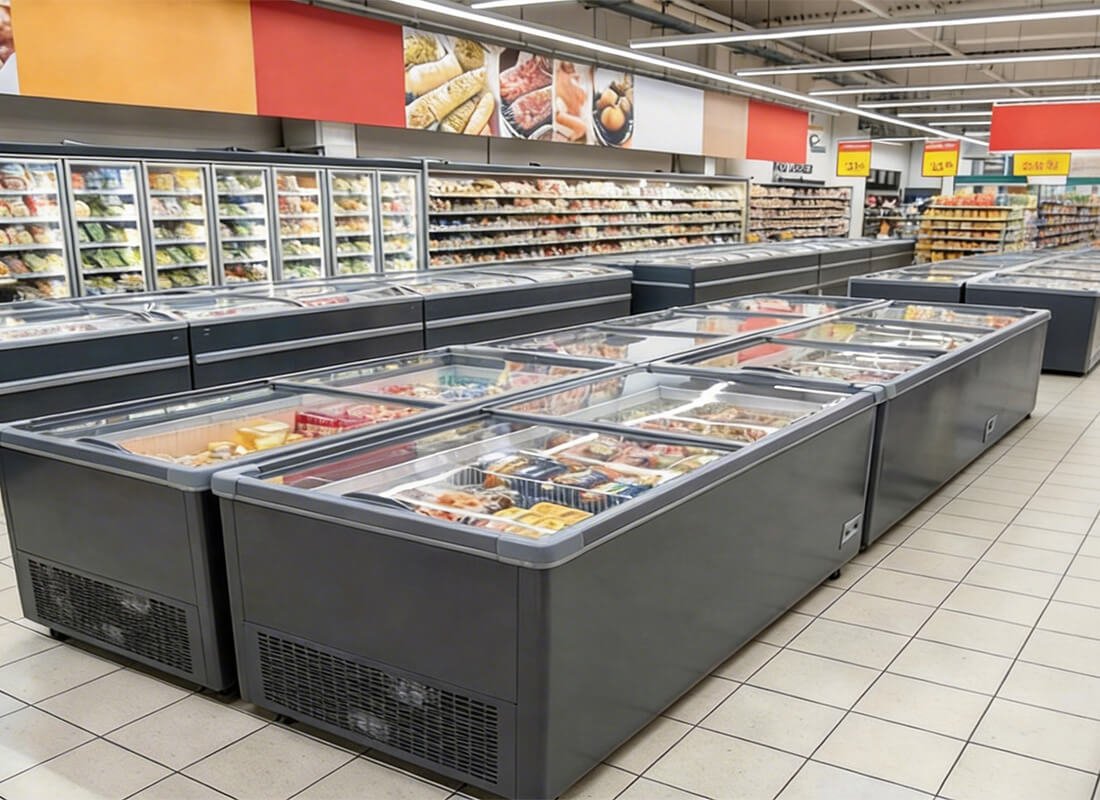
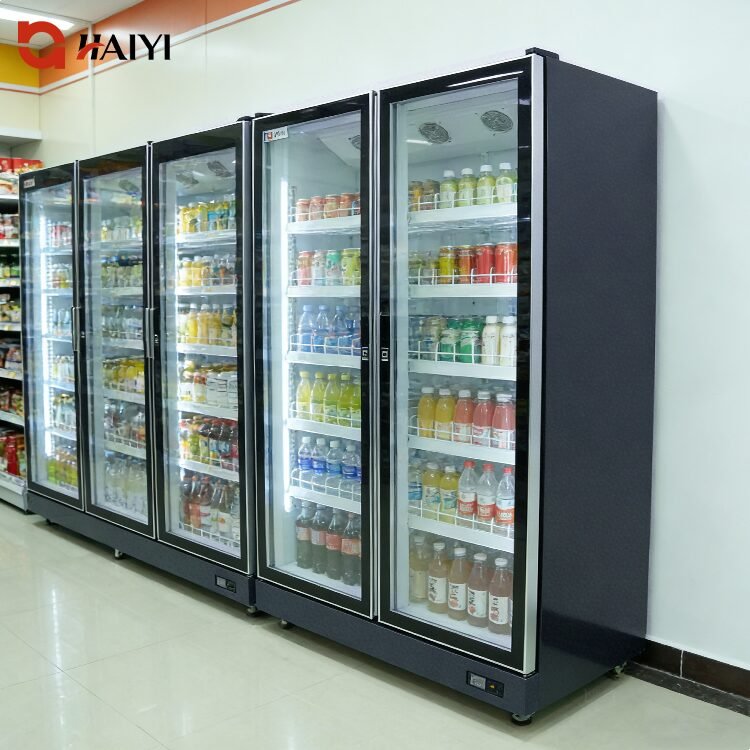
When outfitting a supermarket, butcher shop, or commercial food service business, choosing the right equipment is only half the battle. The installation details—specifically, how your refrigeration units manage condensation—can make or break your daily operations. A poor setup often leads to a notorious industry headache: a commercial refrigerator leaking water all over your showroom floor.
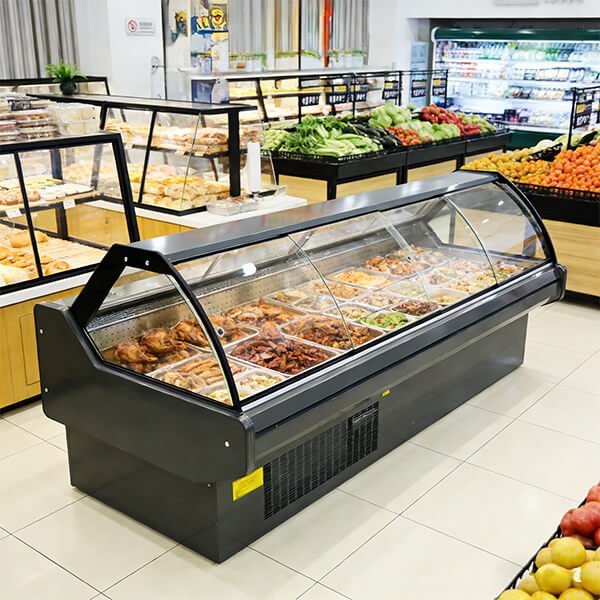
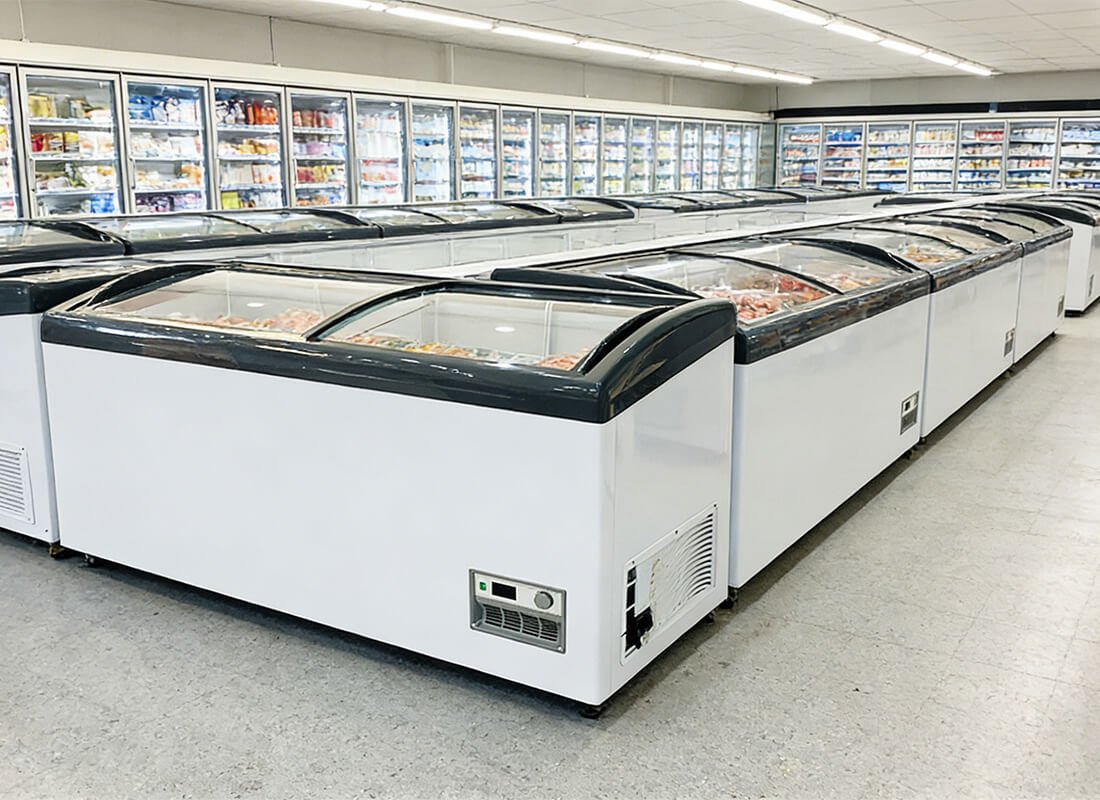
For wholesale buyers and store owners, understanding deli case drainage is critical for maintaining a safe, hygienic, and visually appealing shopping environment. When placing bulk orders for deli showcases, you generally have two main choices for managing condensation: a self-evaporating condensate tray or a direct floor drain setup where a drainage connection is needed.
Here is a comprehensive guide to help you choose the right drainage solution based on your store’s specific conditions.
The Plug-and-Play Option: Self-Evaporating Condensate Tray
A self-evaporating condensate tray (also known as a condensate vaporizer pan) is a built-in system. As the refrigeration cycle produces condensation, the water drips into a pan located beneath the unit. A heating element or the discharge gas from the compressor then heats the pan, evaporating the water into the ambient air.
Pros:
- Flexibility: No plumbing or floor drains are required. You can place the deli case anywhere in the store.
- Easy Installation: Perfect for historic buildings or leased spaces where trenching the floor for new plumbing is prohibited or too expensive.
- Mobility: Makes it easier to rearrange your store layout or move cases for deep cleaning.
Cons:
- Capacity Limits: In high-humidity environments, the system may not evaporate water fast enough, leading to overflows.
- Energy Consumption: Units with electrical heating elements consume slightly more energy to boil off the water.
- Heat Output: The evaporation process releases warm, moist air back into your store, which your HVAC system must then handle.
The Heavy-Duty Solution: Direct Drain (Plumbed)
With a direct drain setup, the condensation routes directly from the deli case through PVC piping into a floor drain. In this scenario, a permanent drainage connection is needed.
Pros:
- Maximum Reliability: Handles massive amounts of condensation effortlessly. Zero risk of overflow, even in highly humid climates or during peak summer months.
- Energy Efficiency: No secondary heaters are required to boil off water, saving on electrical costs.
- Lower Maintenance: Fewer electrical components mean fewer things that can break down over time.
Cons:
- Strict Store Requirements: You must have accessible floor drains. If you don’t, trenching concrete to install them is a significant upfront construction cost.
- Zero Mobility: Once the deli case is plumbed in, it cannot be moved without professional plumbing assistance.
- Health Code Compliance: Requires an “air gap” between the equipment drain line and the floor drain to prevent sewer gases or backups from contaminating the food zone.
Decision Tree: Store Conditions → Drainage Solution
To help you or your wholesale clients make the right purchasing decision, use this simple logic flow based on physical store conditions:
Step 1: Assess Floor Drain Availability
- Condition: Store has existing, accessible floor drains in the display area.
- Recommendation: Direct Drain. It is the most reliable and energy-efficient long-term solution.
- Condition: Store has NO floor drains and trenching is impossible/too expensive.
- Recommendation: Self-Evaporating Tray.
Step 2: Evaluate Environmental Humidity
- Condition: Store is located in a high-humidity coastal area, or lacks a strong HVAC system (ambient humidity regularly exceeds 55-60%).
- Recommendation: Direct Drain. High humidity creates excess condensation that will overwhelm an evaporator pan, resulting in a leaking refrigerator.
- Condition: Store is fully climate-controlled with strict humidity management.
- Recommendation: Self-Evaporating Tray is safe to use.
Step 3: Determine Layout Flexibility Needs
- Condition: The store layout changes seasonally, or the equipment needs to be moved frequently.
- Recommendation: Self-Evaporating Tray. * Condition: The store layout is permanent (e.g., a massive linear deli counter bolted to the floor).
- Recommendation: Direct Drain.
Proactive Deli Showcase Maintenance
Regardless of which drainage system you choose, regular deli showcase maintenance is non-negotiable to prevent a commercial refrigerator leaking water.
- Clear the Drain Lines: Dust, food crumbs, and bacteria can create a gelatinous sludge that clogs drain tubes. Flush the lines quarterly with a mild sanitizing solution.
- Inspect the Evaporator Pan: For self-evaporating units, check the pan monthly. Clean out any mineral scale or debris that could insulate the heating element and prevent water from evaporating.
- Check Door Seals: Damaged gaskets let warm, moist air into the case. This forces the compressor to work overtime and generates excess condensation that can quickly overwhelm either drainage system.
Frequently Asked Questions (FAQ)
Why is my commercial refrigerator leaking water onto the floor?
A leaking deli case is usually caused by a clogged drain line, a broken heating element in the self-evaporating condensate tray, or damaged door gaskets letting in too much ambient humidity. Regular cleaning of the drain tubes usually resolves the issue.
Can I convert a direct drain deli case to a self-evaporating one?
Typically, yes. Many manufacturers offer retrofit kits or optional heated pans that can be installed under the unit. However, you must ensure the case has enough clearance underneath and that your electrical circuit can handle the added amperage of the heater.
Is a drainage connection needed for all commercial deli cases?
No. If you purchase a unit equipped with a self-evaporating condensate tray, a permanent plumbing connection is not required. However, direct plumbed units do require a floor drain and proper air gap installation to comply with local health codes.
How often should I perform deli showcase maintenance on the drainage system?
It is highly recommended to visually inspect your drainage lines and pans monthly, with a deep cleaning and flushing of the lines performed every three to four months to prevent sludge buildup and odors.