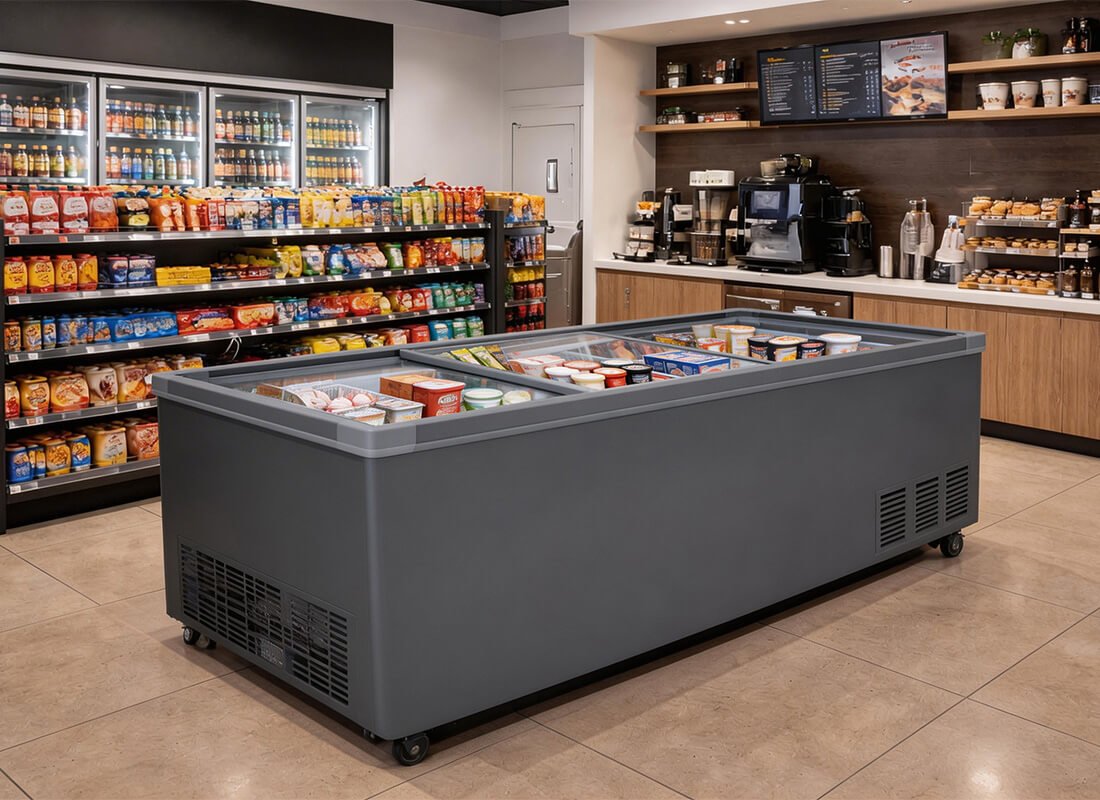
For importers, distributors, and wholesale buyers, commercial refrigeration is not just about product performance. A competitive price and stable cooling capacity may open the conversation, but they rarely close the deal on their own.
In both Europe and the United States, professional buyers now evaluate suppliers through a broader lens: documentation readiness, compliance support, spare parts availability, warranty clarity, and long-term after-sales reliability.
For any manufacturer or exporter targeting the EU or US market, these requirements are no longer “extra service.” They are part of the buyer’s purchasing checklist.
This article explains the key differences between EU and US buyer expectations and provides a practical readiness checklist for commercial refrigeration suppliers.
Why Documentation and After-Sales Readiness Matter
Commercial refrigeration products are used in restaurants, supermarkets, convenience stores, hotels, catering businesses, bakeries, bars, and food retail chains. These buyers need equipment that performs reliably under daily operating pressure.
However, importers and distributors also need confidence before placing bulk orders. They must know whether the supplier can support customs clearance, local compliance checks, product installation, technical questions, and future maintenance.
A buyer may ask:
Can this product be imported smoothly?
Are certificates and technical files available?
Can spare parts be supplied quickly?
Is the warranty policy clear enough for resale?
Can the supplier support distributors after shipment?
When the answers are unclear, the buyer may see the order as risky. When the answers are prepared, the supplier becomes easier to trust.
EU Commercial Refrigeration Buyer Expectations
EU commercial refrigeration buyers tend to place strong emphasis on compliance documentation, product traceability, environmental standards, and energy-related information.
Because the European market is highly regulated, importers usually need documentation before they confirm an order, not after production is finished.
1. Compliance Documentation
EU buyers often expect suppliers to provide relevant documents such as CE-related files, declarations of conformity, test reports, user manuals, electrical information, and product labeling details.
For commercial refrigeration equipment, buyers may also request information related to refrigerants, energy performance, safety standards, and product identification.
A well-prepared supplier should be able to provide organized documentation in English and, when needed, support additional language versions for the target market.
2. Technical File Readiness
European importers may ask for more than a certificate. They may want to know whether the technical file behind the product is complete.
This can include product specifications, electrical diagrams, component details, compressor information, refrigerant data, insulation materials, safety instructions, and quality control records.
A supplier that can respond quickly with structured technical information gives the buyer more confidence.
3. Energy and Environmental Considerations
EU buyers are often sensitive to energy efficiency, refrigerant type, and long-term operating cost. Many buyers want products that support lower energy consumption and meet local environmental expectations.
For wholesale suppliers, it is useful to prepare clear product data sheets showing temperature range, power consumption, refrigerant type, climate class, cabinet dimensions, net volume, and operating conditions.
4. Multilingual Manual Support
Many EU importers sell across multiple countries. A buyer may request manuals, labels, or installation instructions in different European languages.
Even if the supplier does not prepare every language in advance, having editable manual files and a clear translation workflow can help move the deal forward.
5. Spare Parts Planning
EU distributors often expect a practical spare parts system. They want to know which components are easy to replace, how parts are identified, and how quickly the supplier can ship them.
Common spare parts may include thermostats, controllers, fans, shelves, gaskets, hinges, LED lights, compressors, condensers, and door handles.
For distributors, spare parts availability directly affects customer satisfaction and brand reputation.
US Importer Refrigeration Checklist
US buyers usually focus heavily on product safety, import readiness, warranty terms, serviceability, and commercial reliability. Compared with many EU buyers, US importers may place stronger emphasis on practical after-sales support and clear business terms.
1. Import Documentation
A US importer refrigeration checklist typically includes product specifications, commercial invoice details, packing list accuracy, HS code confirmation, labeling information, and any required safety or performance documents.
Buyers want to reduce customs delays and avoid missing information during import procedures.
A supplier should make sure every shipment document is consistent, especially model numbers, quantities, dimensions, gross weight, net weight, and packaging details.
2. Safety and Certification Expectations
US buyers may ask whether products meet relevant safety expectations for electrical appliances and commercial use. Depending on the product type and sales channel, buyers may require specific certifications, test reports, or compliance documentation.
Wholesale suppliers should not wait until the final stage of negotiation to discuss certification status. Clear answers at the beginning help buyers evaluate market suitability faster.
3. Warranty Terms for Commercial Refrigerators
Warranty clarity is very important in the US market. Buyers often want direct answers to questions such as:
How long is the warranty period?
Which parts are covered?
Are compressors covered separately?
Who pays for replacement parts?
Who pays for labor?
How are warranty claims handled?
What evidence is required for a claim?
For commercial refrigerator wholesale orders, warranty terms should be written in simple, practical language. A vague warranty policy can create hesitation, while a clear policy can support faster purchasing decisions.
4. After-Sales Communication Speed
US distributors and importers often value fast communication. When equipment issues occur, they need quick technical feedback because their customers expect solutions.
A good supplier should be able to provide troubleshooting guides, product videos, wiring diagrams, part numbers, and technical support within a reasonable response time.
5. Spare Parts Availability
Spare parts availability is one of the most important factors for US commercial refrigeration buyers. Importers want to avoid situations where a small component failure makes the entire unit unusable.
Suppliers should prepare a recommended spare parts list for each model. This list should include part names, part codes, photos, estimated replacement frequency, and suggested stock quantities for distributors.
EU vs US Buyer Expectations: Key Differences
Although EU and US buyers share many concerns, their priorities are not always the same.
EU buyers often focus more on compliance documents, product labeling, environmental data, energy performance, and multilingual support.
US buyers often focus more on import practicality, warranty clarity, service response, replacement parts, and resale support.
For suppliers, the best strategy is not to prepare one generic document package for every market. Instead, create two market-ready folders: one for EU buyers and one for US buyers.
This makes the buying process easier and shows that the supplier understands regional expectations.
Documentation Checklist for Commercial Refrigeration Imports
A professional documentation package can make a supplier stand out from competitors. Before approaching EU or US buyers, prepare the following materials:
Product specification sheet
Commercial invoice template
Packing list template
User manual
Installation guide
Maintenance instructions
Electrical wiring diagram
Exploded parts diagram
Spare parts list
Warranty policy
Product photos
Packaging photos
Loading photos
Nameplate and label information
Quality inspection report
Refrigerant information
Temperature test data
Container loading plan
Certification or test documents, if applicable
These documents help buyers evaluate product quality, import feasibility, and long-term service readiness.
After-Sales Readiness Checklist
After-sales readiness is not only about solving problems after they happen. It is about proving to buyers that the supplier has a support system before the order is placed.
A strong after-sales package should include:
Clear warranty terms
Spare parts availability
Technical support contact process
Troubleshooting guide
Replacement parts quotation system
Response time expectations
Video support for common repairs
Maintenance recommendations
Model-specific parts codes
Distributor spare parts stocking advice
Complaint handling procedure
Quality feedback process
For wholesale buyers, this level of preparation reduces business risk. It also makes the supplier more attractive for long-term cooperation.
How Suppliers Can Turn Readiness into a Sales Advantage
Many commercial refrigeration suppliers compete mainly on price. However, professional buyers are not only looking for the lowest offer. They are looking for the lowest risk.
A supplier that provides complete documents, clear warranty terms, and reliable spare parts support can often win buyer trust even when the price is not the cheapest.
To turn documentation and after-sales readiness into a sales advantage, suppliers should:
Prepare buyer-specific document folders
Create separate EU and US checklists
Offer model-specific spare parts lists
Explain warranty terms clearly
Respond quickly to technical questions
Keep product data consistent across all files
Provide professional manuals and diagrams
Support distributors with long-term parts supply
These actions show that the supplier is ready for real market operation, not just factory shipment.
What Wholesale Buyers Should Ask Before Placing an Order
Importers and distributors should also use documentation and after-sales readiness as part of their supplier evaluation process.
Before confirming a commercial refrigeration order, buyers should ask:
Can the supplier provide complete product specifications?
Are compliance documents available for the target market?
Is the warranty policy written clearly?
Can spare parts be supplied for several years?
Does the supplier provide technical diagrams?
Are manuals and labels suitable for resale?
How fast does the supplier respond to after-sales issues?
Can the supplier support repeat orders and model consistency?
These questions help buyers avoid future problems and choose suppliers that are ready for long-term cooperation.
Final Thoughts
EU and US commercial refrigeration buyers may have different priorities, but they share one common expectation: they want reliable suppliers who reduce risk.
For EU buyers, documentation, compliance, energy information, and product traceability are often key decision factors. For US buyers, warranty clarity, spare parts availability, import readiness, and after-sales response are especially important.
For manufacturers and exporters, the message is clear. Documentation and after-sales readiness should not be treated as secondary work. They should be part of the sales process from the first inquiry.
A supplier that can provide complete files, clear warranty terms, and dependable spare parts support is not only selling commercial refrigeration equipment. It is selling confidence.
FAQ
What documents do EU commercial refrigeration buyers usually request?
EU commercial refrigeration buyers often request product specifications, user manuals, CE-related documentation, declarations of conformity, test reports, wiring diagrams, refrigerant information, product labels, and technical files. Requirements may vary depending on product type and destination country.
What should be included in a US importer refrigeration checklist?
A US importer refrigeration checklist usually includes product specifications, commercial invoice, packing list, HS code information, safety documentation, labeling details, warranty terms, spare parts list, and after-sales support process.
Why is spare parts availability important for commercial refrigeration buyers?
Spare parts availability helps distributors and end users reduce downtime. Commercial refrigeration equipment is used daily, so quick access to parts such as controllers, fans, gaskets, shelves, hinges, and compressors can directly affect customer satisfaction.
How should warranty terms for commercial refrigerators be written?
Warranty terms should clearly state the warranty period, covered parts, excluded items, claim process, required evidence, replacement procedure, and whether labor or shipping costs are included. Clear warranty language helps buyers make faster purchasing decisions.
Do EU and US buyers have the same expectations?
EU and US buyers share some expectations, but their priorities can differ. EU buyers often focus more on compliance, labeling, energy data, and documentation. US buyers often focus more on warranty clarity, serviceability, spare parts, and practical import support.
How can a supplier improve after-sales readiness?
A supplier can improve after-sales readiness by preparing troubleshooting guides, spare parts lists, wiring diagrams, technical videos, warranty policies, response procedures, and model-specific replacement part codes before shipping products.
Why does documentation affect cross-border commercial refrigeration sales?
Good documentation reduces import risk, speeds up buyer evaluation, supports compliance checks, and helps distributors resell products more confidently. In wholesale trade, complete documentation can become a major factor in closing the deal.