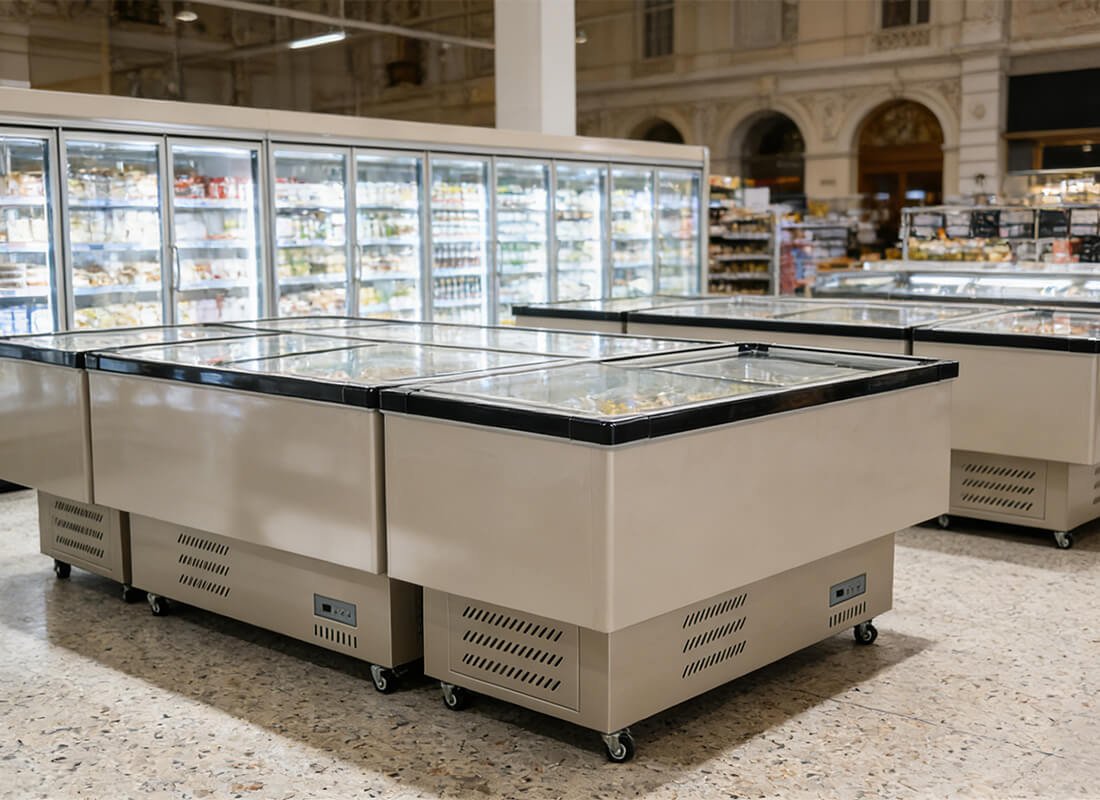
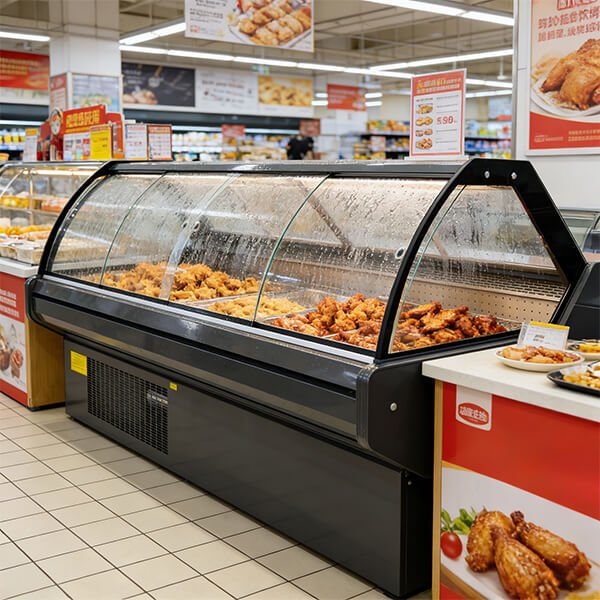
In high-traffic retail environments, refrigeration is more than a piece of equipment. It is part of the customer journey, the store’s energy strategy, and the product protection plan. Whether you operate a supermarket, convenience store, bakery, deli, beverage shop, or specialty food store, a well-designed cold zone helps keep products visible, accessible, and safely chilled even during peak shopping hours.
For wholesale buyers, contractors, and retail operators, high traffic refrigeration design requires careful planning. Open chillers, refrigerated display cases, multideck merchandisers, and island freezers all perform best when they are placed in the right location, supported by proper airflow, and protected from excess heat, humidity, and customer interference.
This checklist provides a practical framework for designing a stable, efficient, and sales-friendly cold zone in a busy retail space.
What Is a Cold Zone in Retail Refrigeration?
A “cold zone” is a dedicated area of the store where refrigerated or frozen products are displayed under controlled temperature conditions. It may include open chillers, glass door merchandisers, serve-over counters, upright freezers, island freezers, or refrigerated wall cases.
In a high-traffic store, this zone must do two things at the same time: maintain stable product temperature and support smooth customer movement. Poor layout can lead to temperature fluctuation, blocked airflow, condensation, product spoilage, high energy bills, and reduced sales performance.
1. Start With Customer Traffic Flow
Before selecting refrigeration equipment, study how customers move through the store. High-traffic refrigeration should never create bottlenecks or force shoppers to stand in areas where doors, carts, or queues interfere with display access.
A good refrigeration layout should:
- Keep main aisles wide enough for carts, baskets, and staff restocking.
- Avoid placing open chillers directly at narrow entrances or checkout queues.
- Position high-demand chilled products along natural customer paths.
- Allow shoppers to browse without blocking other customers.
- Provide enough clearance for case doors, service access, and cleaning.
For wholesale retail projects, traffic flow is especially important because larger stores often have higher product turnover and heavier restocking activity. A cold zone should support both front-of-house sales and back-of-house operations.
2. Choose the Right Refrigeration Equipment for the Location
Not every refrigerated display case is suitable for every retail environment. Open chillers offer excellent product visibility and impulse sales potential, but they are more sensitive to air movement, ambient temperature, and humidity. Glass door merchandisers are generally more energy-efficient and provide better temperature stability, especially in challenging environments.
When selecting equipment, consider:
- Product type: beverages, dairy, meat, deli, fresh produce, desserts, frozen foods.
- Required temperature range.
- Expected customer access frequency.
- Store size and daily traffic volume.
- Ambient temperature and humidity.
- Energy efficiency goals.
- Merchandising style and product visibility.
For high-traffic areas, open chillers should be used where store conditions are stable and airflow can be controlled. In hot, humid, or draft-heavy locations, glass door refrigerated displays may provide better performance.
3. Control Airflow Around Open Chillers
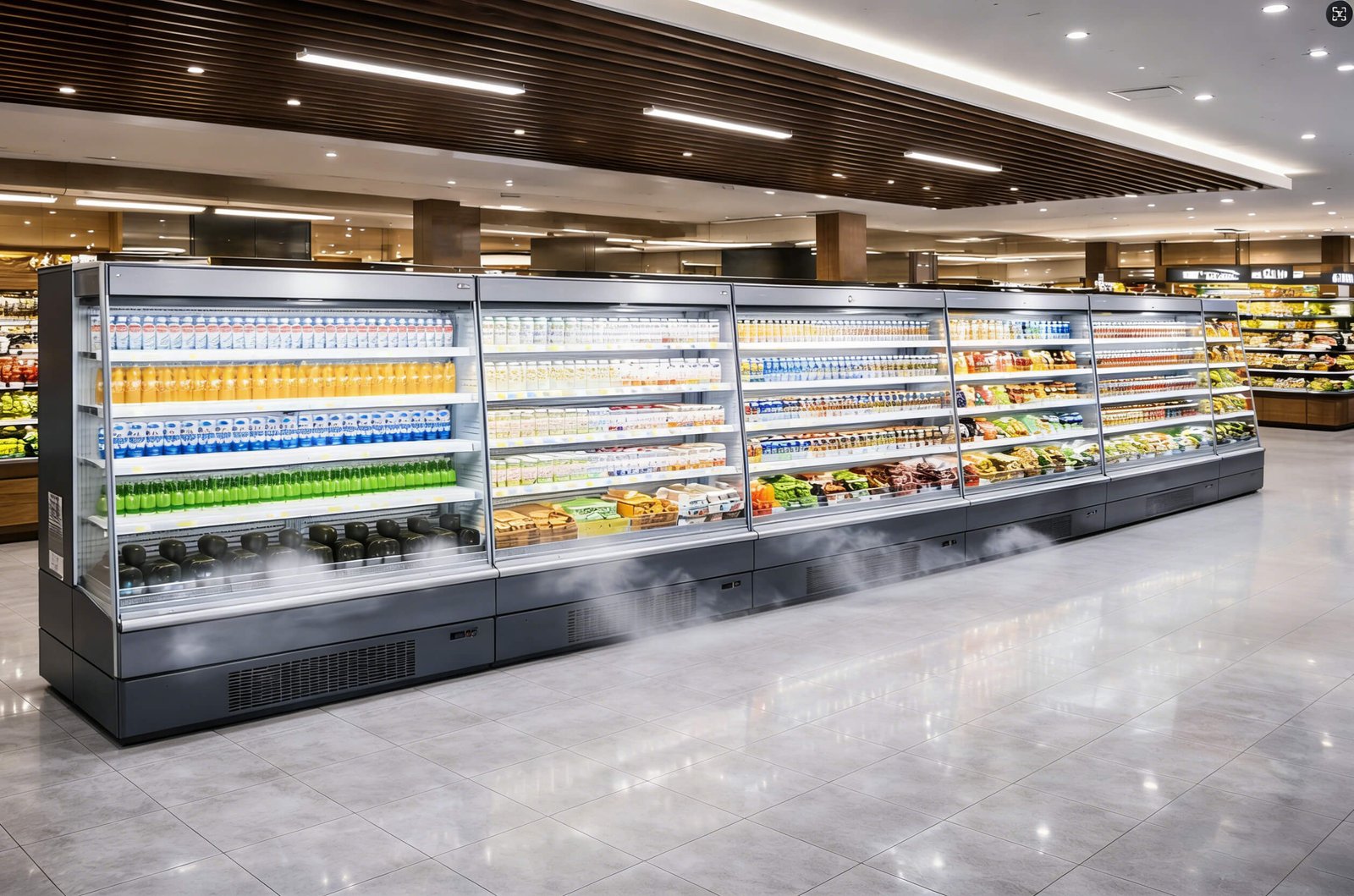
Airflow is one of the most important factors in open chiller high traffic performance. Open refrigerated displays rely on an air curtain to keep cold air inside the display area. If that air curtain is disturbed, the case may struggle to maintain temperature.
Avoid placing open chillers near:
- Store entrances.
- Automatic doors.
- Air conditioning vents.
- Heating outlets.
- Ceiling fans.
- Large windows with direct sunlight.
- High-speed walkways or strong cross-drafts.
Even a well-built open chiller can lose performance if it is exposed to constant warm air movement. For stable temperature in retail display areas, the surrounding air environment must be predictable.
4. Manage Heat Sources Carefully
Heat load has a direct impact on refrigeration efficiency. The more heat a display case must fight, the harder the system works. This increases energy consumption and may shorten equipment life.
Common heat sources include:
- Sunlight through windows.
- Ovens, grills, coffee machines, and hot food counters.
- Warm air from entrances.
- Overhead lighting.
- Poorly insulated walls.
- Crowded product loading.
- Nearby non-refrigerated equipment that releases heat.
When planning a cold zone, create distance between refrigeration equipment and heat-producing areas. If the store layout requires refrigerated displays near warm zones, use glass doors, night curtains, thermal barriers, or improved ventilation to reduce performance loss.
5. Plan for Humidity and Condensation
Humidity is a major concern in retail refrigeration design, especially for open chillers and frozen displays. Excess moisture can cause condensation, fogged glass, slippery floors, frost buildup, and product quality issues.
To reduce humidity problems:
- Keep refrigerated cases away from open entrances.
- Maintain proper indoor humidity control.
- Use anti-fog glass where needed.
- Ensure drainage systems are correctly installed.
- Avoid overloading display cases.
- Check door seals and case alignment.
- Keep evaporator coils clean.
- Schedule regular defrost cycles for freezer equipment.
In high-traffic stores, customers frequently open doors, move products, and disrupt case conditions. This makes humidity control even more important.
6. Confirm Electrical Capacity Early
Refrigeration equipment has specific electrical requirements, and these should be reviewed before installation. A common mistake is designing the merchandising layout first and checking electrical capacity later. This can lead to delays, extra construction costs, or unsafe installations.
Your electrical checklist should include:
- Voltage and phase requirements.
- Dedicated circuits.
- Proper grounding.
- Compressor startup load.
- Lighting load.
- Defrost system requirements.
- Backup power needs.
- Local code compliance.
- Easy access for maintenance.
For wholesale buyers ordering multiple refrigerated display units, always confirm electrical specifications before shipment. This helps avoid installation problems at the job site.
7. Protect Ventilation and Service Space
Refrigerated displays need space to breathe. Blocking ventilation areas can cause overheating, poor cooling performance, and higher maintenance costs.
Make sure there is enough space for:
- Condenser airflow.
- Technician access.
- Cleaning around coils.
- Drain line inspection.
- Electrical panel access.
- Product loading and unloading.
- Safe customer movement.
Never place boxes, promotional displays, signs, or storage items against ventilation openings. In retail environments, this is a frequent issue because staff may use unused gaps as temporary storage space.
8. Design Merchandising Around Temperature Stability
Good merchandising should improve sales without hurting refrigeration performance. In many stores, the temptation is to overfill refrigerated cases to maximize product display. However, overloaded cases can block airflow and create warm spots.
A smart merchandising refrigeration design should:
- Keep products below the load line.
- Avoid blocking air return grills.
- Use shelves that match the case design.
- Group products by temperature requirement.
- Place fast-moving items in easy-reach zones.
- Use clear product segmentation.
- Maintain strong visibility without overstocking.
- Avoid hanging signs inside the air curtain.
For open chillers, product placement matters. Items should be arranged to support airflow from the discharge to the return path. Poor stocking can reduce cooling performance even if the equipment itself is high quality.
9. Use Doors, Night Curtains, or Covers Where Appropriate
In high-traffic retail, energy efficiency is a long-term cost issue. Open chillers can support strong impulse sales, but they typically consume more energy than closed displays. For stores with long operating hours, night curtains or sliding covers can help reduce energy loss after business hours.
Consider using:
- Glass door merchandisers for beverages and dairy.
- Night curtains for open multideck chillers.
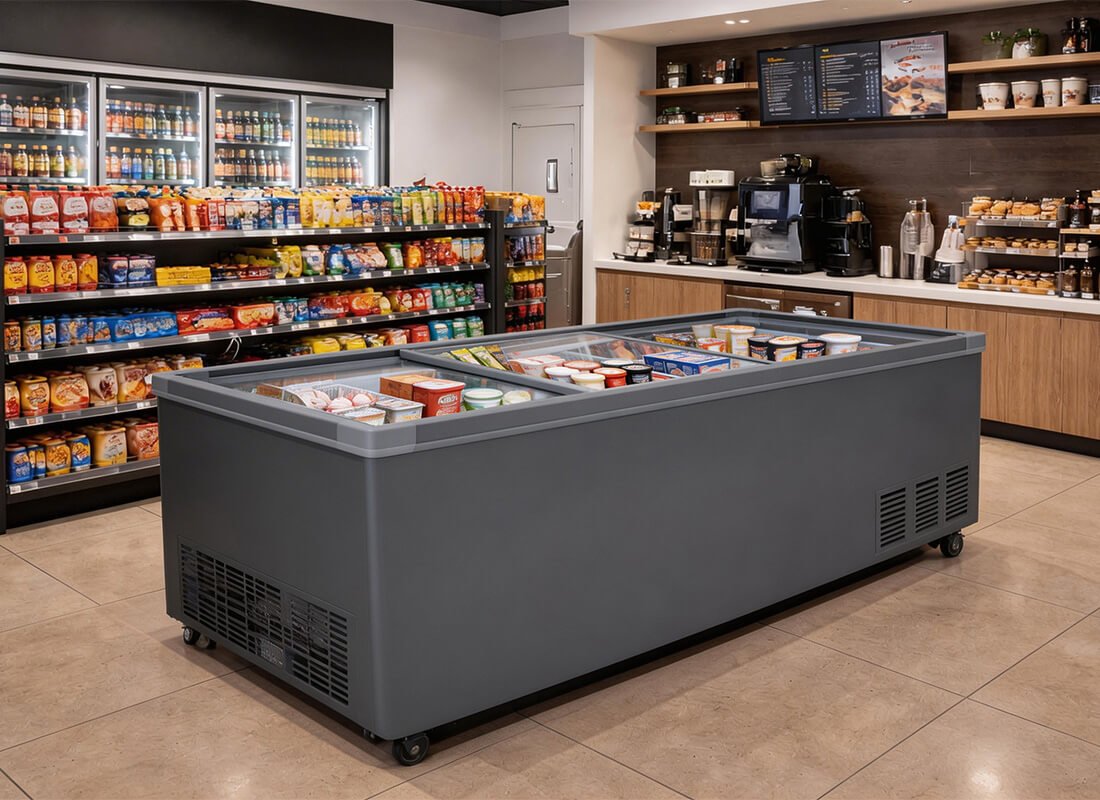
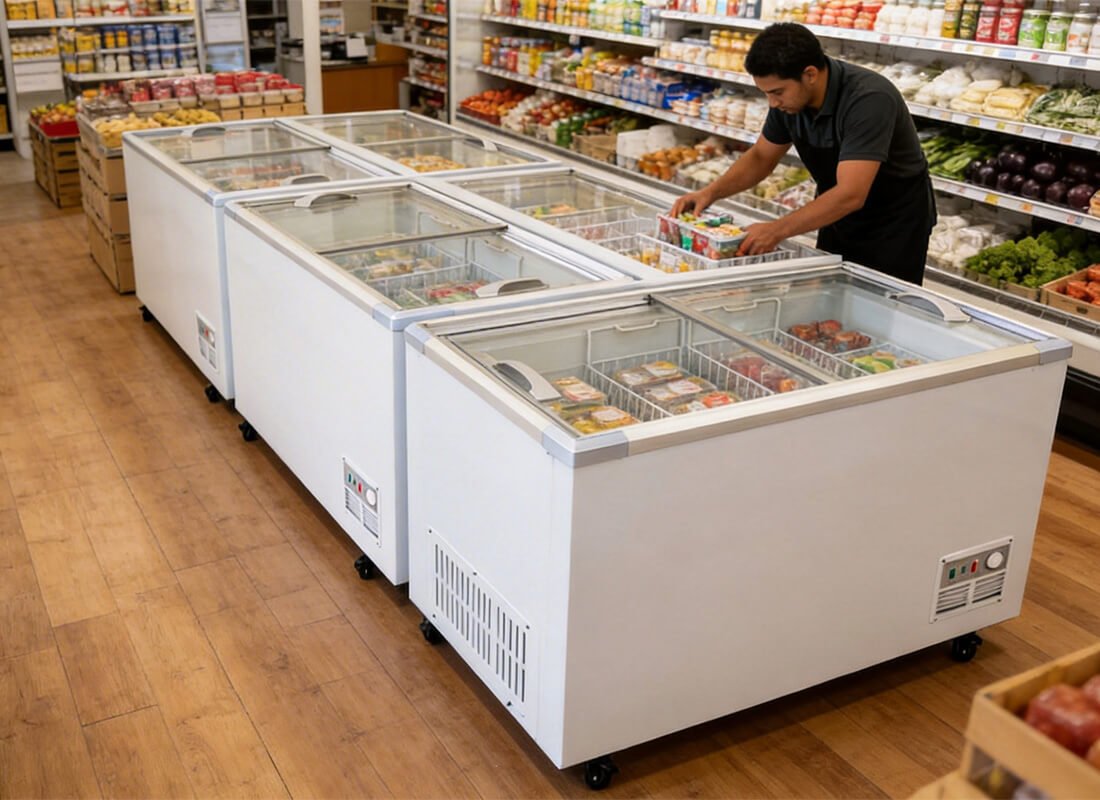
- Lids for island freezers.
- Self-closing doors.
- Energy-efficient LED lighting.
- High-efficiency compressors and fans.
The right solution depends on the balance between visibility, access, energy use, and temperature control.
10. Plan Restocking Routes
High-traffic refrigeration design is not only about customer movement. Staff movement matters too. If employees must restock products during peak hours, the layout should allow fast and safe replenishment.
A good restocking plan should include:
- Clear access from storage to display.
- Minimal crossing through checkout lines.
- Wide enough aisles for carts.
- Easy shelf access.
- Product rotation space.
- First-in, first-out inventory support.
- Reduced obstruction during busy periods.
Poor restocking flow can block customers, damage products, and leave display cases open for too long.
11. Monitor Temperature Performance After Installation
Even the best design should be tested after installation. A refrigerated display may perform differently once the store is fully stocked, crowded, and operating under real conditions.
After installation, monitor:
- Product temperature.
- Air discharge and return temperature.
- Compressor cycle behavior.
- Defrost performance.
- Condensation levels.
- Door closing performance.
- Customer access patterns.
- Energy consumption.
- Hot spots inside the display.
For stores with multiple refrigerated cases, digital temperature monitoring can help detect problems early and protect product quality.
12. Build a Maintenance Schedule
High-traffic stores put heavy demand on refrigeration equipment. Dust, packaging debris, frequent door openings, and constant restocking can all affect performance.
A practical maintenance plan should include:
- Cleaning condenser coils.
- Checking evaporator coils.
- Inspecting door gaskets.
- Testing drain lines.
- Verifying thermostat settings.
- Checking fan operation.
- Cleaning air intake and return areas.
- Inspecting electrical connections.
- Reviewing temperature logs.
Preventive maintenance is usually less expensive than emergency repairs, product loss, or downtime.
Cold Zone Layout Checklist for High-Traffic Retail
Use this checklist when planning or reviewing a retail refrigeration area:
Traffic Flow
- Are aisles wide enough for peak customer volume?
- Can customers access products without blocking traffic?
- Is the cold zone away from entrance drafts?
- Is there enough room for carts and staff restocking?
Airflow
- Are open chillers protected from cross-drafts?
- Are HVAC vents positioned away from the air curtain?
- Are return and discharge air paths clear?
- Is the equipment installed with proper clearance?
Heat Control
- Is refrigeration away from ovens, windows, and hot counters?
- Is direct sunlight avoided?
- Are lighting and nearby equipment heat loads considered?
- Are warm and cold zones separated where possible?
Humidity
- Is indoor humidity controlled?
- Are doors, glass, and seals suitable for the environment?
- Is drainage properly installed?
- Is frost or condensation risk minimized?
Electrical
- Are voltage and phase requirements confirmed?
- Are dedicated circuits available?
- Is the system compliant with local electrical codes?
- Is there access for service and emergency shutoff?
Merchandising
- Are products kept below load lines?
- Are air return grills unobstructed?
- Are fast-moving products placed in easy-reach areas?
- Is the display attractive without being overloaded?
Maintenance
- Can technicians access key components?
- Is coil cleaning easy?
- Are drain lines accessible?
- Is temperature monitoring in place?
Final Thoughts
A successful cold zone is not created by refrigeration equipment alone. It depends on the relationship between layout, airflow, heat control, humidity, electrical planning, maintenance, and merchandising. For high-traffic retail environments, every detail matters.
By following a practical refrigeration layout checklist, retailers can improve temperature stability, reduce energy waste, protect product quality, and create a better shopping experience. For wholesale buyers and commercial refrigeration contractors, careful planning also helps ensure smoother installation, fewer service issues, and stronger long-term performance.
FAQ
What is the best refrigeration layout for a high-traffic retail store?
The best layout keeps refrigerated displays along natural customer pathways while avoiding entrances, heat sources, strong drafts, and narrow aisles. It should balance product visibility, customer access, airflow stability, and service clearance.
Are open chillers suitable for high-traffic retail areas?
Yes, open chillers can work well in high-traffic areas when airflow, humidity, and ambient temperature are controlled. However, they should not be placed near doors, HVAC vents, fans, or direct sunlight because these conditions can disrupt the air curtain.
How can I keep a retail refrigerated display at a stable temperature?
To maintain stable temperature in retail display cases, avoid overloading products, keep air return grills clear, protect the case from warm drafts, control humidity, and schedule regular maintenance. Temperature monitoring is also recommended.
Should I choose open chillers or glass door merchandisers?
Open chillers offer strong visibility and easy product access, making them good for impulse sales. Glass door merchandisers usually provide better energy efficiency and temperature stability. The best choice depends on store conditions, product type, traffic volume, and energy goals.
What causes condensation around retail refrigeration equipment?
Condensation is often caused by high humidity, warm air infiltration, poor door seals, blocked airflow, or placing refrigeration near entrances. Proper humidity control, good drainage, and correct equipment placement can reduce condensation problems.
Why is airflow important in refrigeration design?
Airflow helps refrigerated displays maintain the correct temperature. If airflow is blocked or disrupted, the equipment may develop warm spots, use more energy, and fail to protect products properly.
How often should commercial refrigeration equipment be maintained?
High-traffic retail refrigeration should be checked regularly, with basic cleaning and inspection performed frequently. Condenser coils, door gaskets, fans, drains, and temperature controls should be part of a preventive maintenance schedule.